Rainy Season Container Gardening Tips for Beginners
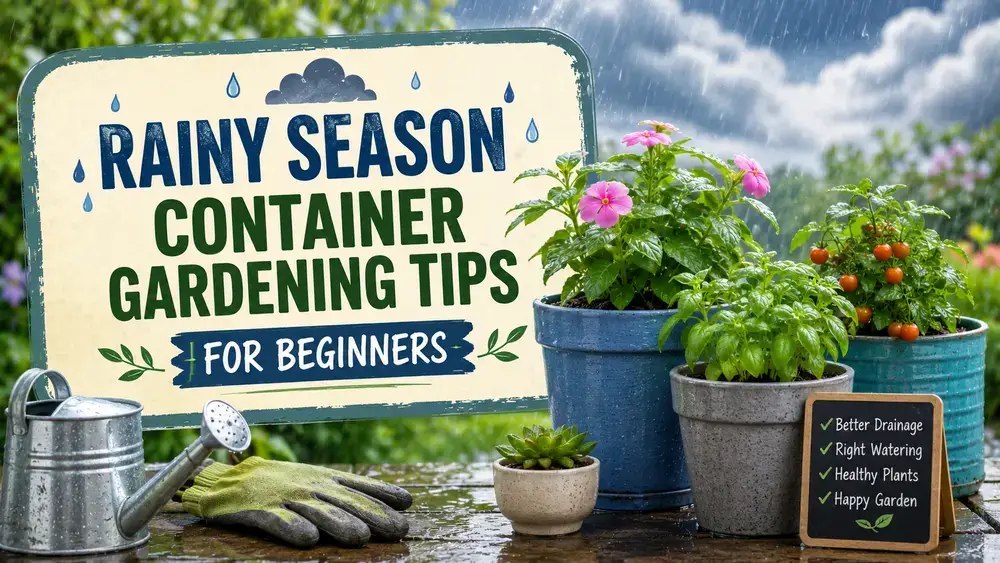
Container gardening becomes more challenging during long rainy periods. While rain helps plants grow, too much water can quickly damage roots, attract fungus, and weaken healthy plants. Many beginners assume plants always benefit from extra rain, but overwatering plants in rain is one of the most common causes of container garden failure.
The good news is that a few simple adjustments can protect your plants throughout the wet season. With proper drainage, smart watering habits, and the right containers, your garden can continue thriving even during heavy rainfall.
In this guide, you will learn practical rainy season container gardening tips, how to avoid wet soil problems, and the best ways to keep your plants healthy during rainy weather.
Quick Answer
Rainy season container gardening requires good drainage, lighter watering, and proper container placement. To avoid overwatering problems, use well-draining soil, elevate pots, check moisture before watering, and protect sensitive plants from continuous rain exposure.
Why Rainy Season Can Be Difficult for Container Gardens
Container plants react differently to rain compared to plants growing directly in the ground. Pots hold a limited amount of soil, so excess water builds up quickly. If water cannot drain properly, roots stay wet for too long and begin to rot.
Common rainy season problems include:
- Root rot
- Yellow leaves
- Mold and fungus growth
- Mosquito breeding in standing water
- Slow plant growth
- Nutrient loss from excessive rain
Understanding these risks helps you take preventive steps before plants become damaged.
Choose Containers With Excellent Drainage
Good drainage is the most important part of rainy season container gardening.
Every container should have enough drainage holes at the bottom. Without proper drainage, water remains trapped inside the pot and causes root damage.
According to the University of Illinois Extension drainage guide, drainage holes are essential for healthy root systems because they allow excess water to escape naturally.
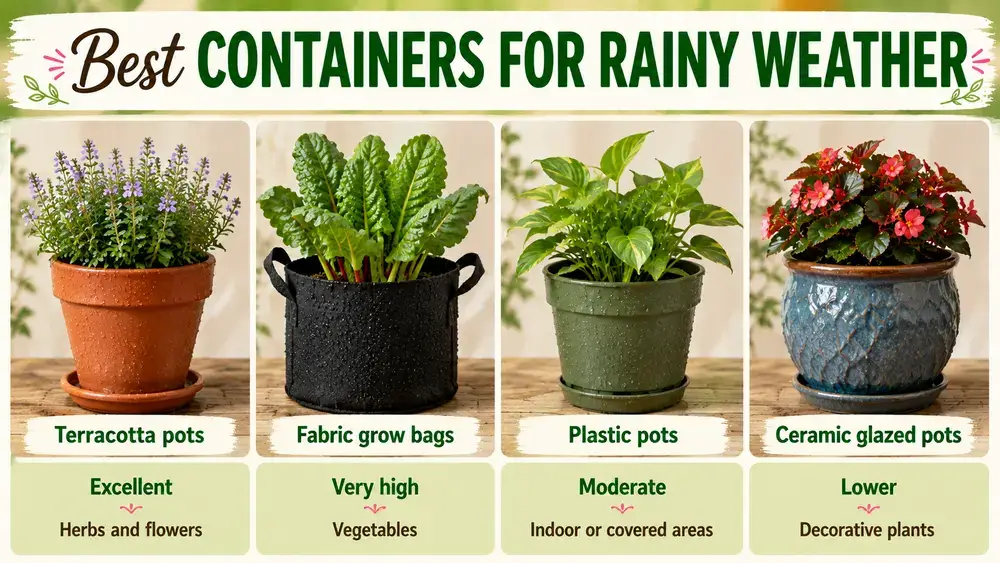
Best Containers for Rainy Weather
| Container Type | Drainage Quality | Best For |
|---|---|---|
| Terracotta pots | Excellent | Herbs and flowers |
| Fabric grow bags | Very high | Vegetables |
| Plastic pots | Moderate | Indoor or covered areas |
| Ceramic glazed pots | Lower | Decorative plants |
Terracotta and fabric grow bags are usually better during wet weather because they dry faster.
Helpful Drainage Tips
- Elevate pots using bricks or pot feet
- Remove saucers during heavy rain
- Avoid decorative pots without holes
- Clean blocked drainage holes regularly
Use Well-Draining Potting Soil
Heavy soil holds too much moisture during rainy periods. Garden soil from the ground is usually too compact for containers.
Instead, use a lightweight potting mix designed for containers. A good mix improves airflow around roots and prevents wet soil problems.
You can also improve drainage by mixing in:
- Perlite
- Coco coir
- Coarse sand
- Pine bark
If you are unsure which soil works best, this guide on the best soil for container gardening explains the ideal soil mix for healthy potted plants.
Stop Watering Automatically
One of the biggest beginner mistakes is continuing a regular watering schedule during rainy weather.
Plants may already have enough moisture from rainfall. Adding more water can quickly lead to root rot.
Instead of watering daily, check the soil first.
How to Check Soil Moisture
Use your finger to test the top 2 inches of soil.
- If the soil feels wet, do not water
- If it feels slightly dry, water lightly
- If the soil feels muddy or smells bad, drainage may be poor
Learning when plants truly need water is important during every season. This article on how often to water container plants explains how watering needs change based on weather conditions.
Move Sensitive Plants Under Shelter
Some plants tolerate rain very well, while others struggle with constant moisture.
During long rainy periods, move delicate plants to protected areas such as:
- Covered patios
- Balconies
- Greenhouses
- Under roof overhangs
Plants with soft stems or thick foliage are more likely to develop fungal diseases when constantly wet.
Plants That Dislike Excess Rain
- Succulents
- Lavender
- Rosemary
- Coleus
- Snake plants
Plants That Handle Rain Better
- Mint
- Spinach
- Ferns
- Marigolds
- Tomatoes with proper drainage
Rotating containers between sunny and protected areas helps maintain healthy growth.
Avoid Standing Water Around Pots
Standing water around containers creates several problems. It increases humidity, encourages mosquitoes, and prevents roots from breathing properly.
After heavy rain:
- Empty saucers immediately
- Clear clogged balcony drains
- Remove water trapped in decorative containers
- Raise pots slightly off the ground
Even healthy plants can struggle when pots sit in water for long periods.
Watch for Early Signs of Overwatering
Many beginners confuse overwatering symptoms with underwatering. Both can cause drooping leaves, but the solution is very different.
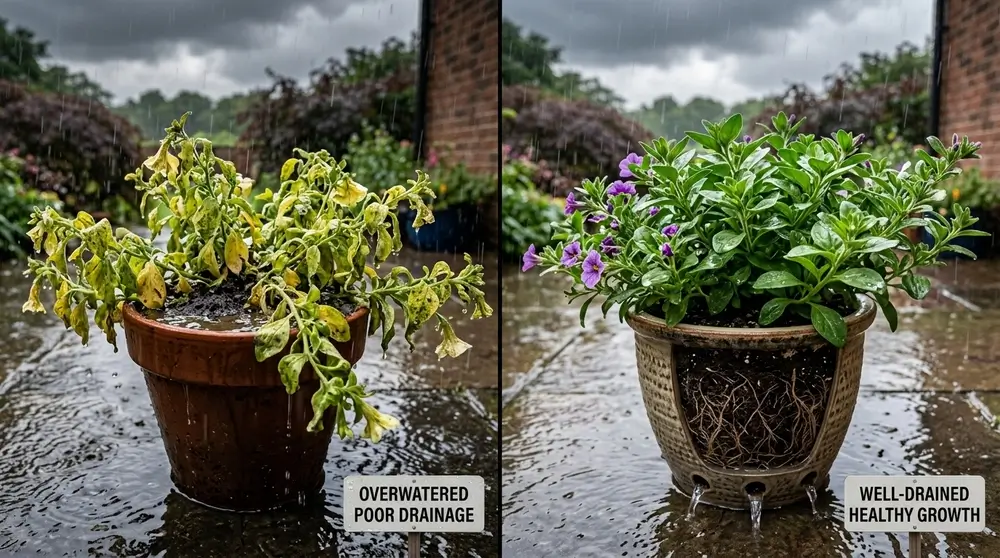
Signs Your Container Plants Are Overwatered
- Yellow leaves
- Mushy stems
- Mold on soil surface
- Fungus gnats around pots
- Wilting despite wet soil
- Bad smell from the container
If you notice these symptoms, stop watering immediately and improve drainage.
According to the Royal Horticultural Society container maintenance guide, regular monitoring is important because container plants are more sensitive to moisture changes than garden beds.
Protect Plants From Fungal Diseases
Wet leaves and humid conditions increase fungal infections during rainy weather.
Common rainy season diseases include:
- Powdery mildew
- Root rot
- Leaf spot
- Gray mold
Simple Ways to Reduce Disease
Improve Airflow
Do not overcrowd pots. Leave enough space between containers so air can circulate properly.
Water the Soil, Not the Leaves
If watering is necessary, aim water directly at the soil instead of soaking foliage.
Remove Damaged Leaves Quickly
Trim yellow or moldy leaves before disease spreads.
Use Morning Sunlight
Morning sunlight helps dry wet leaves faster and reduces fungal growth.
Fertilizing During Rainy Season
Heavy rain can wash nutrients out of containers. Plants may appear pale or weak even when soil is wet.
Use fertilizer carefully during rainy periods.
Best Fertilizer Practices
- Use slow-release fertilizer
- Apply smaller amounts more often
- Avoid fertilizing waterlogged soil
- Feed plants after heavy rain stops
Liquid fertilizers can also wash away quickly during storms.
Best Plants for Rainy Season Container Gardening
Some plants naturally handle moisture better than others. Choosing rain-tolerant plants makes gardening easier during wet months.
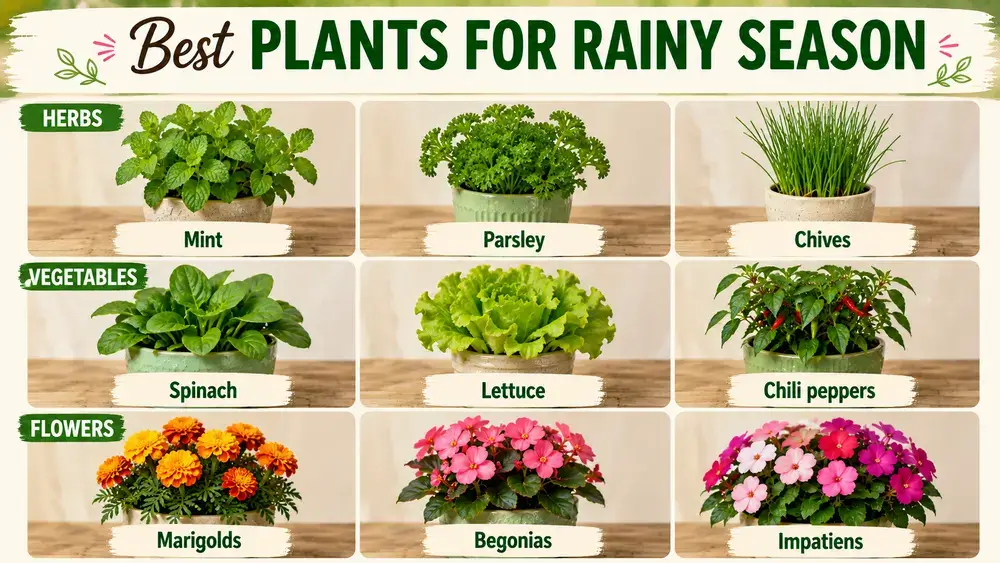
Great Rainy Season Container Plants
Herbs
- Mint
- Parsley
- Chives
Vegetables
- Spinach
- Lettuce
- Chili peppers
Flowers
- Marigolds
- Begonias
- Impatiens
These plants generally recover well from occasional heavy rainfall if drainage is good.
Common Rainy Season Container Gardening Mistakes
Many beginners accidentally damage plants during rainy weather without realizing it.
1. Using Pots Without Drainage Holes
This traps water and causes rapid root rot.
2. Watering Without Checking Soil
Rainfall already provides moisture. Extra watering can suffocate roots.
3. Overcrowding Containers
Poor airflow increases fungal problems.
4. Ignoring Yellow Leaves
Yellowing often signals wet soil problems early.
5. Using Heavy Garden Soil
Dense soil stays wet too long in containers.
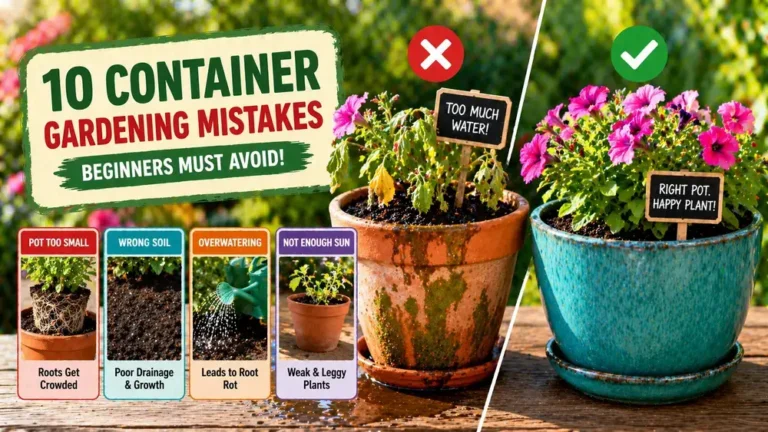
If you want to avoid more beginner errors, read these common container gardening mistakes that often reduce plant health and growth.
Easy Rainy Season Plant Care Checklist
Here is a simple routine you can follow during wet weather:
| Task | Frequency |
| Check soil moisture | Daily |
| Empty standing water | After rain |
| Inspect leaves for fungus | Twice weekly |
| Clean drainage holes | Weekly |
| Rotate pots for sunlight | Weekly |
| Trim damaged leaves | As needed |
Small maintenance habits make a big difference during the rainy season.
Smart Watering Tips for Rainy Weather
The Proven Winners watering guide recommends adjusting watering routines based on weather conditions rather than following a strict schedule.
Here are a few practical watering habits:
- Water early in the morning
- Skip watering after overnight rain
- Use smaller watering cans during wet weeks
- Focus on dry containers only
- Test soil moisture before every watering
This approach helps prevent accidental overwatering plants in rain.
Conclusion
Rainy weather does not have to ruin your container garden. With proper drainage, careful watering, and regular plant checks, your containers can stay healthy throughout the season.
The key to successful rainy season container gardening is preventing excess moisture before problems begin. Well-draining soil, raised containers, and smart watering habits protect roots and reduce fungal diseases.
Start by checking your pots today. Small improvements now can prevent major plant damage later in the season.
Want to improve your container gardening skills even more? Explore our helpful beginner guides on watering schedules, soil selection, and common container gardening mistakes to keep your plants healthy year-round.
FAQs About Rainy Season Container Gardening
1. How often should I water container plants during the rainy season?
In rainy season container gardening, you should water only when the soil begins to dry out. Check the soil moisture with your finger before watering. If the top 1 to 2 inches of soil feels wet, skip watering. Rainfall often provides enough moisture, and adding extra water can lead to root rot and other overwatering problems.
2. What are the signs that my container plants are getting too much rain?
Common signs include yellow leaves, wilting despite wet soil, mold growth, and a foul smell coming from the pot. During rainy season container gardening, inspect your plants regularly. Catching these symptoms early allows you to improve drainage and prevent serious root damage before the plant’s health declines.
3. Which containers work best during the rainy season?
Containers with multiple drainage holes are best for rainy weather. Terracotta pots and fabric grow bags are especially useful because they allow excess moisture to escape more easily. For successful rainy season container gardening, avoid decorative pots without drainage holes, as standing water can quickly damage plant roots.
4. Can heavy rain wash nutrients out of container soil?
Yes, frequent rain can leach nutrients from container soil, especially in smaller pots. In rainy season container gardening, use a slow-release fertilizer and monitor plants for pale leaves or slow growth. Applying fertilizer after extended rainy periods can help restore nutrients and keep plants healthy.
5. What are the best plants for rainy season container gardening?
Plants that tolerate moist conditions generally perform better during wet weather. Good choices include mint, parsley, spinach, lettuce, marigolds, and begonias. When planning rainy season container gardening, choose plants suited to local rainfall levels and always provide proper drainage to avoid waterlogged roots.