Best Vegetables for Container Gardening (Easy to Grow List)
If you want fresh vegetables but lack garden space, container gardening is one of the easiest ways to get started. You can grow a surprising amount of food right on a balcony, patio, or even a sunny windowsill. The key is choosing the best vegetables for container gardening and understanding how to care for them properly.
In this guide, you will learn which vegetables thrive in pots, how to set up your container garden step by step, and simple tips to avoid common beginner mistakes. Whether you are new to gardening or just short on space, this article will help you grow healthy, productive plants with confidence.
Quick Answer
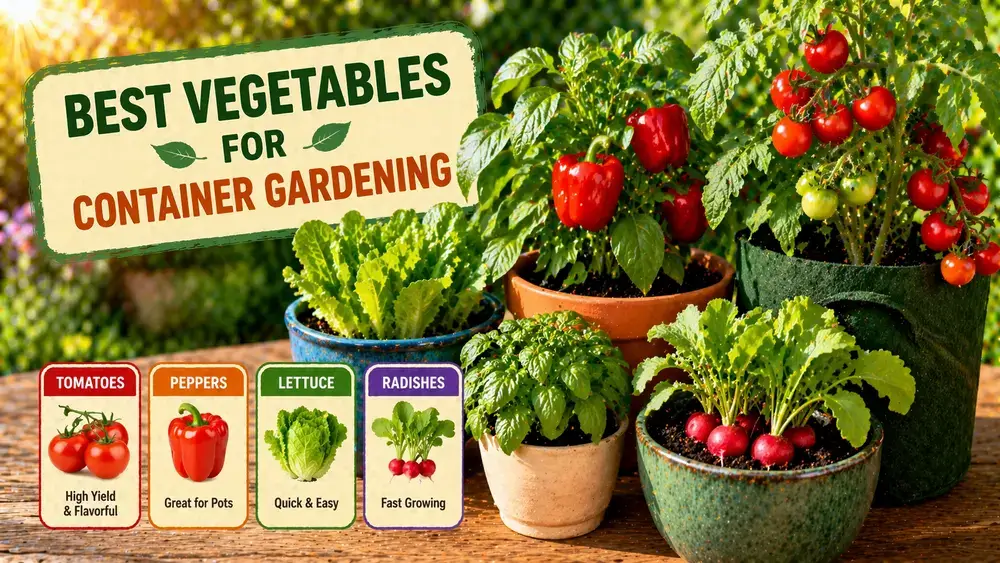
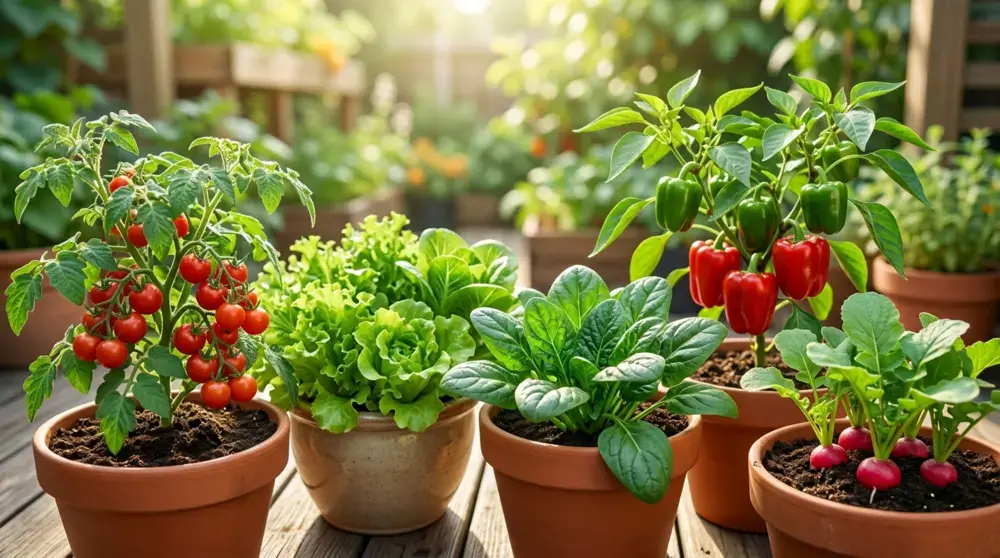
The best vegetables for container gardening include tomatoes, lettuce, spinach, peppers, radishes, carrots, and herbs. These plants grow well in limited space, require minimal maintenance, and adapt easily to pots. With proper soil, watering, and sunlight, beginners can achieve excellent results.
Why Container Gardening Works for Vegetables
Container gardening is ideal for beginners because it gives you more control over growing conditions. You can manage soil quality, water levels, and sunlight more easily than in traditional garden beds.
Here’s why it works so well:
- Perfect for small spaces like apartments or balconies
- Easier to control pests and diseases
- Flexible placement for better sunlight exposure
- Less physically demanding than ground gardening
If you are just starting, this detailed container gardening for beginners step-by-step guide will help you understand the full process from setup to harvest.
Best Vegetables for Container Gardening
Choosing the right plants makes all the difference. Below are some of the most reliable and easy container vegetables for beginners.
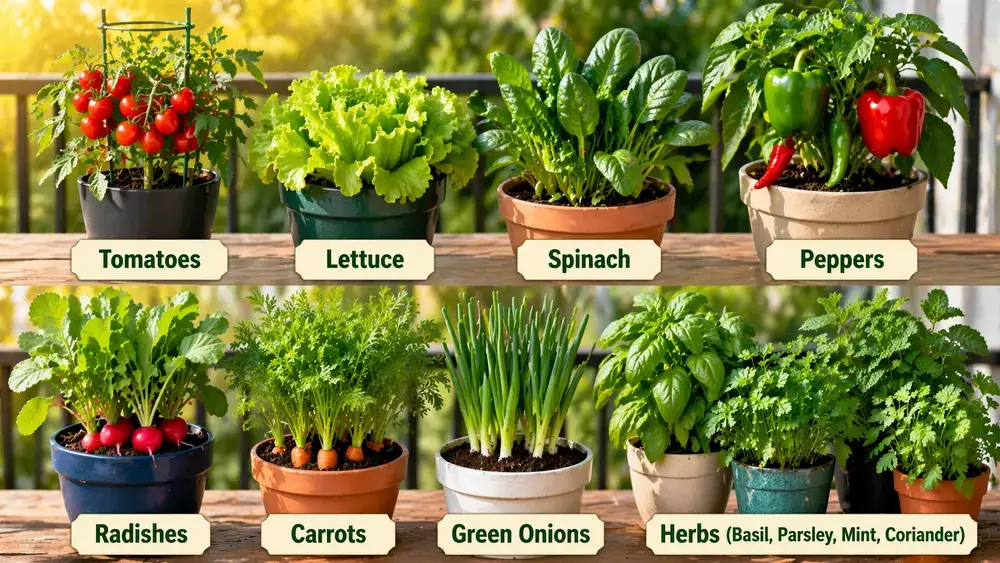
1. Tomatoes
Tomatoes are one of the most popular choices for growing vegetables in pots.
- Best types: Cherry tomatoes, Roma tomatoes
- Container size: At least 12–16 inches deep
- Sunlight: Full sun (6–8 hours daily)
Tip: Use a stake or cage to support growth.
2. Lettuce
Lettuce grows quickly and does not require deep containers.
- Best types: Leaf lettuce, butterhead
- Container size: 6–8 inches deep
- Harvest: Cut leaves as needed
It is perfect for beginners because it grows fast and can be harvested multiple times.
3. Spinach
Spinach is another fast-growing leafy green.
- Prefers cooler temperatures
- Grows well in shallow containers
- Requires consistent watering
4. Peppers
Peppers are compact plants that thrive in pots.
- Best types: Bell peppers, chili peppers
- Container size: 10–12 inches
- Needs warm conditions and full sun
5. Radishes
Radishes are one of the fastest-growing vegetables.
- Ready to harvest in 3–4 weeks
- Ideal for small containers
- Great for quick results
6. Carrots
Carrots grow well in deep containers.
- Choose short varieties like “baby carrots”
- Container depth: At least 10–12 inches
- Loose soil is essential for straight roots
7. Green Onions
Green onions are very beginner-friendly.
- Grow well in small pots
- Can be regrown from kitchen scraps
- Require minimal care
8. Herbs (Bonus)
While not vegetables, herbs are essential for any container garden.
- Basil, parsley, mint, coriander
- Easy to maintain
- Enhance your meals instantly
According to the University of Maryland Extension, many vegetables, such as tomatoes, lettuce, and peppers, are well-suited for containers when grown with proper care (growing vegetables in containers).
Quick Comparison of Container Vegetables
| Vegetable | Container Depth | Growth Speed | Difficulty |
|---|---|---|---|
| Lettuce | Shallow | Fast | Easy |
| Radishes | Shallow | Very Fast | Very Easy |
| Tomatoes | Deep | Medium | Moderate |
| Peppers | Medium | Medium | Easy |
| Carrots | Deep | Medium | Moderate |
| Spinach | Shallow | Fast | Easy |
Step-by-Step Guide to Starting a Container Garden
Step 1: Choose the Right Containers
Pick containers with drainage holes to prevent water buildup. The size should match the plant’s root depth.
- Small pots for herbs and lettuce
- Medium pots for peppers
- Large containers for tomatoes
Step 2: Use High-Quality Soil
Regular garden soil is too heavy for pots. Instead, use a well-draining mix.
This guide on the best soil for container gardening explains how to choose or create the ideal potting mix.
Step 3: Ensure Proper Sunlight
Most vegetables need 6–8 hours of sunlight daily.
- South-facing balconies are ideal
- Rotate pots if sunlight is uneven
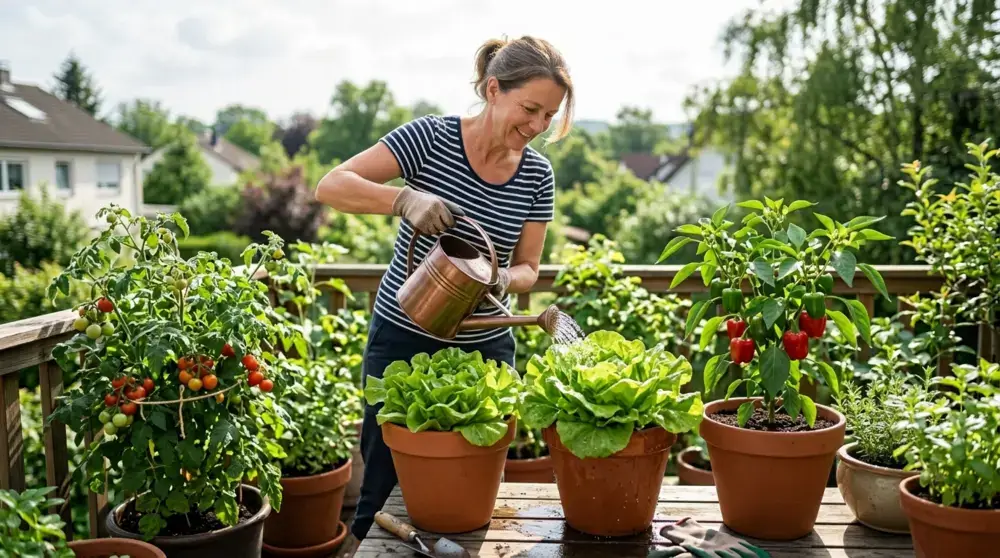
Step 4: Water Correctly
Container plants dry out faster than ground plants.
- Check the soil daily
- Water when the top inch feels dry
If you are unsure, this beginner-friendly guide on how often to water container plants can help you avoid overwatering or underwatering.
Step 5: Fertilize Regularly
Nutrients in pots get used up quickly.
- Use liquid fertilizer every 2–3 weeks
- Compost is a great natural option
Step 6: Provide Support
Some plants, like tomatoes and beans, need support.
- Use stakes or cages
- Keep plants upright and healthy
For more detailed recommendations, the Old Farmer’s Almanac offers practical advice on container gardening vegetables, including spacing and care tips.
Beginner Tips for Success
If you want better results from your beginner vegetable gardening, follow these simple tips:
- Start small with 2–3 plants
- Choose compact or dwarf varieties
- Avoid overcrowding pots
- Use mulch to retain moisture
- Check plants daily for pests
Also, placing containers in a location with good airflow helps reduce disease problems.
Common Mistakes to Avoid
Many beginners struggle because of a few avoidable mistakes.
1. Using the Wrong Container Size
Small pots restrict root growth and reduce yield.
2. Poor Drainage
Waterlogged soil leads to root rot.
3. Overwatering
Too much water is just as harmful as too little.
4. Lack of Sunlight
Vegetables need strong light to grow properly.
5. Ignoring Soil Quality
Healthy soil is the foundation of successful growth.
Oregon State University also emphasizes that proper container size, sunlight, and watering are essential for success in growing vegetables in small spaces.
How to Choose the Right Vegetables for Your Space
Not all vegetables suit every environment. Consider these factors:
Space Available
- Small balcony: herbs, lettuce, radishes
- Medium space: peppers, spinach
- Larger area: tomatoes, carrots
Climate
- Cool climates: spinach, lettuce
- Warm climates: tomatoes, peppers
Time Commitment
- Low maintenance: radishes, green onions
- Moderate care: tomatoes, peppers
By matching your plants to your environment, you improve your chances of success.
Conclusion
Growing your own food does not require a large garden. With the right approach, anyone can grow fresh produce at home using containers. Start with the best vegetables for container gardening, like lettuce, tomatoes, and peppers, and focus on proper soil, watering, and sunlight.
Container gardening is simple, flexible, and rewarding. Once you gain confidence, you can expand your garden and try more varieties.
Ready to start your container garden today? Begin with a few easy vegetables and build your skills step by step.
For a complete setup guide, check out this helpful container gardening for beginners guide and take your first step toward growing fresh, healthy food at home.
FAQs About Best Vegetables for Container Gardening
1. What are the best vegetables for container gardening for beginners?
The best vegetables for container gardening for beginners include lettuce, radishes, tomatoes, peppers, and spinach. These plants grow quickly, need minimal care, and adapt well to pots. Start with 2–3 easy options like lettuce and radishes to build confidence. Choose compact varieties and ensure they get enough sunlight for healthy growth.
2. How deep should containers be for growing vegetables?
Container depth depends on the vegetable type. Leafy greens like lettuce need 6–8 inches, while root crops like carrots require at least 10–12 inches. Tomatoes and peppers grow best in deeper pots, around 12–16 inches. Choosing the right depth is essential when growing the best vegetables for container gardening to ensure proper root development.
3. How often should I water container vegetables?
Most container vegetables need watering once a day, especially in warm weather. Always check the top inch of soil. If it feels dry, it is time to water. The best vegetables for container gardening grow well when the soil stays evenly moist, not soggy. Early morning watering helps prevent evaporation and keeps plants healthy.
4. Can I grow vegetables in containers without a garden?
Yes, you can successfully grow the best vegetables for container gardening even without a traditional garden. A balcony, patio, or sunny window is enough. Focus on plants like herbs, lettuce, and peppers that thrive in small spaces. Just make sure they receive at least 6 hours of sunlight daily.
5. What type of soil is best for container vegetables?
A light, well-draining potting mix is ideal for container vegetables. Avoid using regular garden soil because it becomes compacted in pots. Use a mix with compost, coco coir, or peat moss for better aeration. The best vegetables for container gardening perform much better when roots have access to air, moisture, and nutrients.