Best Herbs for Container Gardening (Beginner-Friendly Guide)
Growing your own herbs does not require a large garden or years of experience. With the right approach, anyone can grow fresh, aromatic herbs in small spaces using simple containers. This guide will walk you through the best herbs for container gardening, along with practical steps to get started, even if you are a complete beginner.
You will learn which herbs grow well in pots, how to set up your containers properly, and how to care for your plants so they thrive. Whether you plan to grow herbs indoors on a windowsill or outdoors on a balcony, this guide will help you build a successful herb garden from day one.
Quick Answer
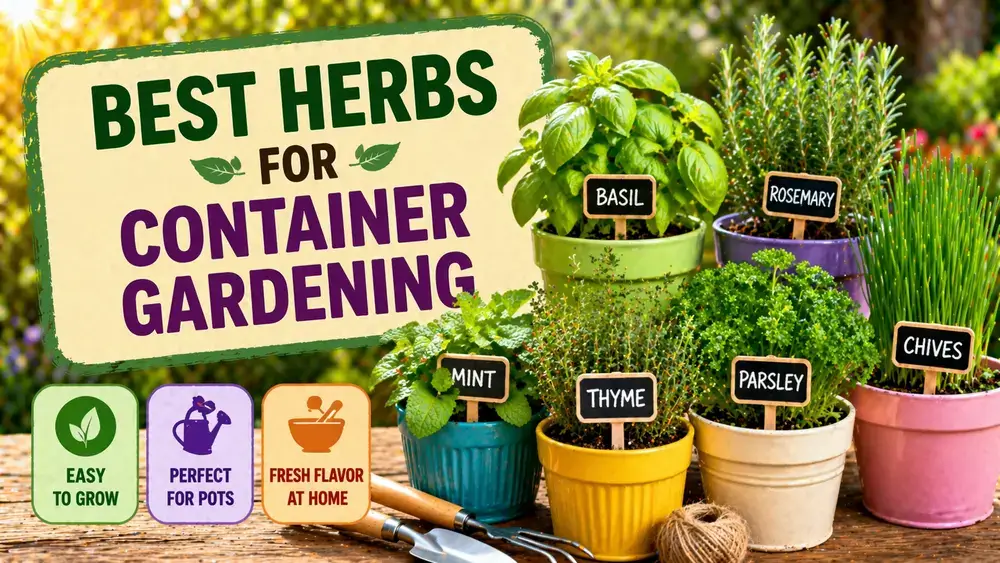
The best herbs for container gardening include basil, mint, parsley, thyme, and chives. These herbs are easy to grow in pots, require minimal maintenance, and adapt well to small spaces and indoor conditions.
Why Herbs Are Perfect for Container Gardening
Herbs are one of the easiest plants to grow in containers because they are compact, fast-growing, and do not require deep soil. Many herbs actually perform better in pots since you can control soil quality, watering, and sunlight more easily.
For beginners, this means fewer problems and quicker results. If you are new to gardening, starting with herbs gives you confidence while producing something useful for your kitchen.
If you are just getting started, this beginner guide on container gardening basics can help you understand the foundation before planting herbs.
Best Herbs for Container Gardening Beginners
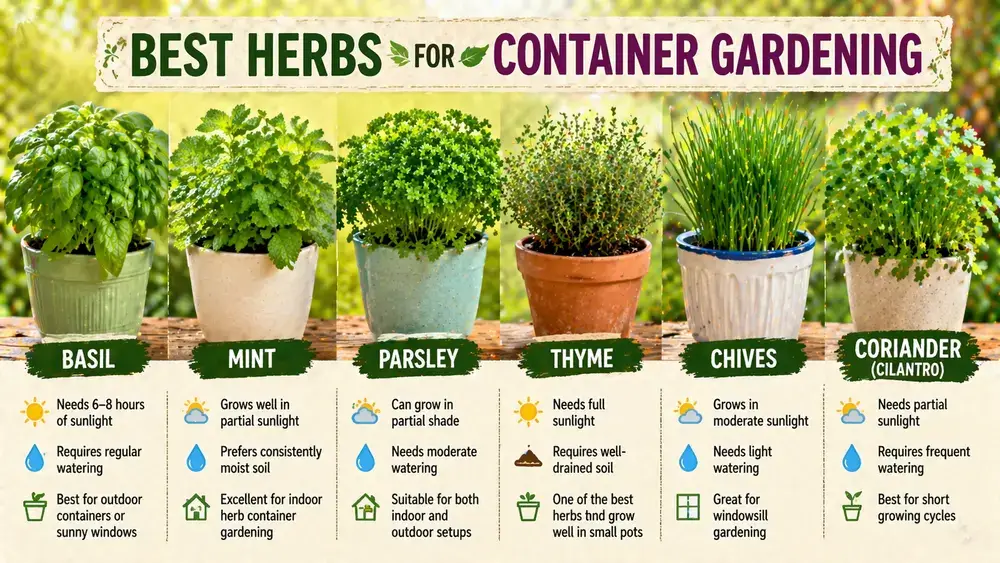
1. Basil
Basil is one of the most popular and easy herbs to grow in pots. It grows quickly and thrives in warm conditions.
- Needs 6–8 hours of sunlight
- Requires regular watering
- Best for outdoor containers or sunny windows
2. Mint
Mint is extremely forgiving and ideal for beginners. It spreads aggressively, which makes containers the perfect way to control it.
- Grows well in partial sunlight
- Prefers consistently moist soil
- Excellent for indoor herb container gardening
3. Parsley
Parsley grows slowly but is very reliable. It works well in small pots and adapts to different conditions.
- Can grow in partial shade
- Needs moderate watering
- Suitable for both indoor and outdoor setups
4. Thyme
Thyme is a low-maintenance herb that thrives in dry conditions. It is perfect if you tend to forget watering.
- Needs full sunlight
- Requires well-drained soil
- One of the best herbs that grows well in small pots
5. Chives
Chives are compact and ideal for small spaces. They regrow quickly after cutting, making them very practical.
- Grows in moderate sunlight
- Needs light watering
- Great for windowsill gardening
6. Coriander (Cilantro)
Coriander grows quickly but prefers cooler temperatures.
- Needs partial sunlight
- Requires frequent watering
- Best for short growing cycles
Comparison Table: Best Herbs for Containers
| Herb | Sunlight Needs | Watering Level | Best Location |
|---|---|---|---|
| Basil | High | Medium | Outdoor / Sunny spot |
| Mint | Medium | High | Indoor / Partial sun |
| Parsley | Medium | Medium | Indoor / Outdoor |
| Thyme | High | Low | Outdoor |
| Chives | Medium | Low | Indoor / Windowsill |
| Coriander | Medium | Medium | Outdoor / Cool areas |
How to Grow Herbs in Containers (Step-by-Step)
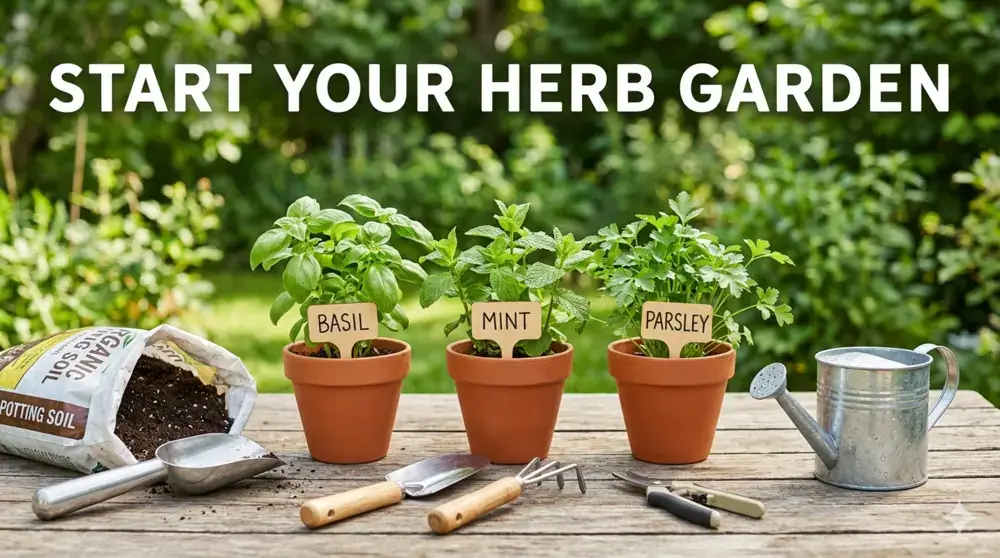
Step 1: Choose the Right Container
Select pots with drainage holes to prevent water buildup. Herbs do not like soggy soil. Clay pots are ideal because they allow airflow, but plastic pots are also suitable if drainage is good.
Step 2: Use the Right Soil
Avoid using garden soil directly. Herbs need light, well-draining soil to grow properly.
You can learn more about choosing the right mix in this guide on the best soil for container gardening.
Step 3: Provide Enough Sunlight
Most herbs need at least 4–6 hours of sunlight daily. Place containers near windows or in open outdoor spaces.
For indoor herb container gardening, south-facing windows usually work best.
You can also refer to this detailed university guide on growing herbs in containers for sunlight and container placement recommendations.
Step 4: Water Correctly
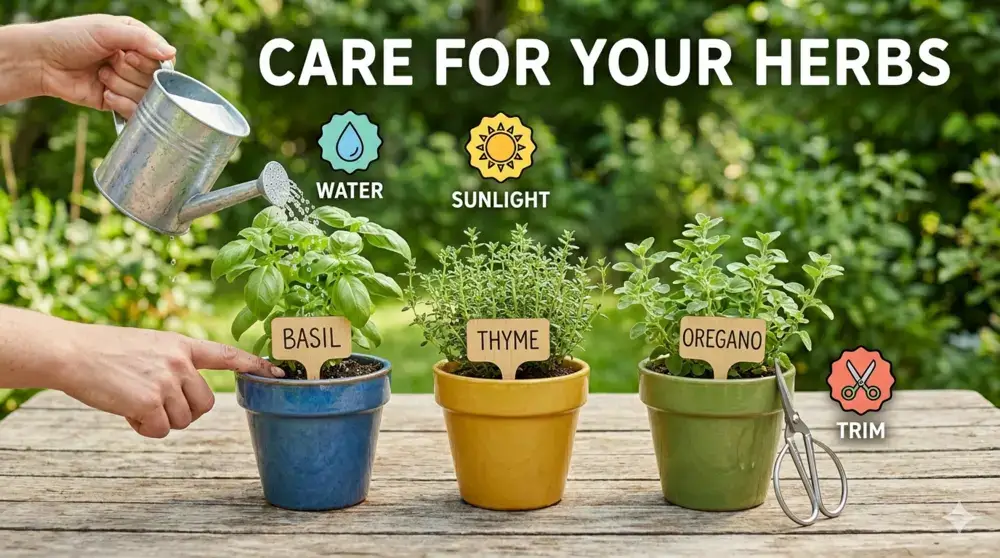
Overwatering is one of the most common mistakes. Herbs prefer slightly dry conditions rather than constantly wet soil.
A simple rule:
- Water when the top inch of soil feels dry
This guide on how often to water container plants explains watering schedules in more detail.
Step 5: Harvest Regularly
Regular harvesting encourages new growth. Do not cut more than one-third of the plant at a time.
Frequent trimming helps herbs grow fuller and healthier.
Beginner Tips for Successful Herb Gardening
- Start with 2–3 herbs instead of planting too many at once
- Use separate pots for herbs like mint that spread quickly
- Rotate pots occasionally for even sunlight exposure
- Avoid overcrowding plants in one container
- Label your herbs if you are growing multiple varieties
For more in-depth care tips, this resource on growing herbs in containers and indoors explains how light and environment affect herb growth.
Common Mistakes to Avoid
Overwatering
Too much water leads to root rot, especially in small pots. Always check the soil before watering.
Using the Wrong Soil
Heavy soil prevents drainage and damages roots. Always use a light potting mix.
Lack of Sunlight
Herbs become weak and leggy without enough light. Move them to brighter areas if needed.
Growing Too Many Herbs Together
Different herbs have different needs. Group only those with similar water and sunlight requirements.
Ignoring Drainage
Containers without drainage holes can quickly kill your plants.
Indoor vs Outdoor Herb Container Gardening
Indoor Herb Gardening
- Best for small spaces
- Requires good sunlight or grow lights
- Ideal for herbs like mint, parsley, and chives
Outdoor Herb Gardening
- Provides stronger growth due to natural sunlight
- Better for herbs like basil and thyme
- Requires protection from extreme weather
According to this guide on growing herbs in containers, most herbs perform best with at least 4–6 hours of sunlight and proper airflow, which is easier to achieve outdoors.
Recommended Tools for Beginners
You do not need expensive tools to start. Basic items are enough:
- Small hand trowel
- Watering can
- Pruning scissors
- Good quality pots with drainage
- Lightweight potting mix
Keeping your setup simple makes it easier to maintain your garden consistently.
Conclusion
Growing herbs in containers is one of the simplest ways to start gardening. With the right herbs, proper soil, and basic care, you can enjoy fresh herbs all year round, even in a small space.
Start with beginner-friendly herbs like basil, mint, and parsley. Focus on proper watering, sunlight, and regular harvesting. Once you gain confidence, you can expand your container garden with more varieties.
If you want to improve your results, explore our detailed guides on container gardening basics, soil selection, and watering techniques. These will help you build a stronger foundation and grow healthier plants.
Start your herb container garden today and enjoy fresh, homegrown flavors every day.
FAQs About Best Herbs for Container Gardening
1. What are the easiest herbs for container gardening beginners?
The easiest herbs for container gardening beginners include basil, mint, parsley, and chives. These herbs grow quickly, adapt well to pots, and require minimal care. Start with 2–3 varieties to avoid feeling overwhelmed. Place them in a sunny spot and use well-draining soil. These beginner-friendly herbs help you learn the basics while still producing fresh, usable leaves.
2. How often should I water herbs in containers?
Herbs for container gardening usually need watering when the top inch of soil feels dry. Most herbs prefer slightly dry soil rather than constant moisture. Overwatering is a common mistake, especially in small pots. Always check the soil before watering and ensure your containers have drainage holes. Herbs like mint need more water, while thyme prefers drier conditions.
3. Can I grow herbs indoors in containers successfully?
Yes, many herbs for container gardening grow well indoors if they receive enough light. Place your pots near a bright window that gets at least 4–6 hours of sunlight daily. Herbs like parsley, chives, and mint are especially suitable for indoor growing. If natural light is limited, consider using a simple grow light to support healthy growth.
4. What type of soil is best for container herbs?
The best soil for herbs for container gardening is a light, well-draining potting mix. Avoid using heavy garden soil, as it can retain too much water and damage roots. A mix designed for containers allows proper airflow and prevents root rot. You can also add a small amount of compost to improve nutrients and support steady growth.
5. Can I grow multiple herbs in one container?
You can grow multiple herbs for container gardening in one pot, but only if they have similar needs. For example, basil and parsley can grow together, while mint is better kept separate because it spreads quickly. Choose a larger container and avoid overcrowding. This helps each plant get enough nutrients, water, and space to grow properly.