Container Gardening in Hot Climates: Tips for Beginners
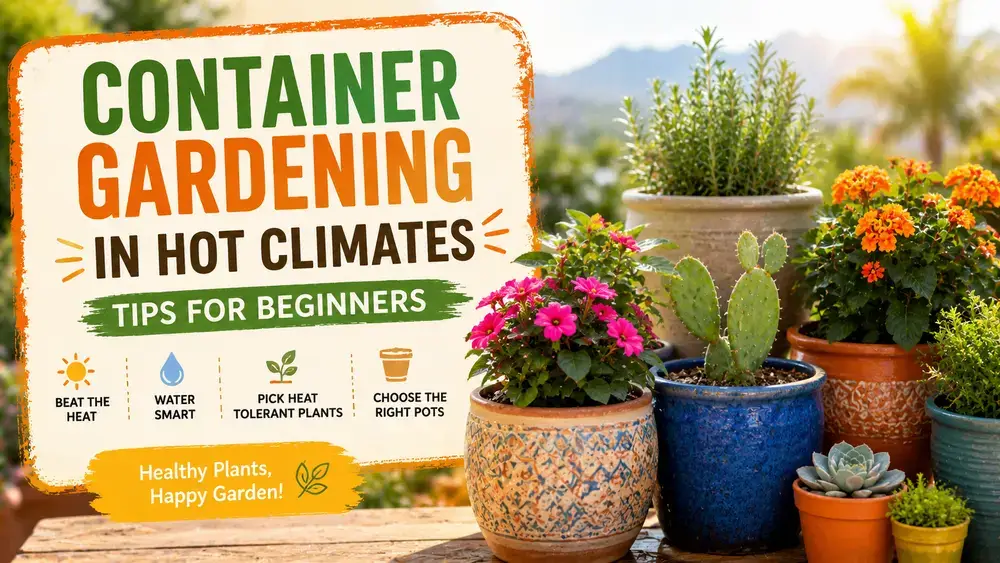
Starting a garden in extreme heat can feel frustrating for beginners. Plants dry out quickly, leaves burn under strong sunlight, and containers often overheat within hours. The good news is that container gardening in hot climates can still be successful when you use the right methods from the beginning.
With proper watering, heat-tolerant plants, and smart container choices, you can grow vegetables, herbs, flowers, and even fruits during hot summer months. This guide explains simple and practical strategies to protect your plants from heat stress while helping them thrive in containers. You will also learn beginner-friendly hot weather gardening tips, common mistakes to avoid, and the best plants for sunny conditions.
Quick Answer
Container gardening in hot climates works best when you use large containers, moisture-retaining soil, mulch, and heat-tolerant plants. Watering deeply, protecting pots from afternoon sun, and choosing the right container material can prevent plants from drying out or overheating during summer.
Why Container Gardening Gets Harder in Hot Climates
Hot weather creates several problems for container plants because pots dry out much faster than garden beds. In extreme temperatures, roots can become overheated, especially in small or dark-colored containers.
Common summer gardening problems include:
- Soil drying within a few hours
- Wilting leaves during midday heat
- Blossom drop on vegetables
- Burned foliage from intense sunlight
- Weak root growth from overheated containers
Containers exposed to direct afternoon sun can become extremely hot, especially plastic or metal pots. According to the Royal Horticultural Society’s guide on growing plants in containers, larger containers hold moisture longer and help stabilize soil temperature.
Understanding these challenges is the first step toward successful gardening in summer heat.
Container Gardening in Hot Climates: Beginner Basics
Before planting anything, beginners should focus on four important areas:
Choose the Right Container Size
Small pots dry out quickly in hot weather. Larger containers give roots more space and hold moisture longer.
For most beginner plants:
| Plant Type | Recommended Pot Size |
|---|---|
| Herbs | 10–12 inches |
| Tomatoes | 16–20 inches |
| Peppers | 14–18 inches |
| Lettuce | 8–10 inches |
| Flowers | 12–16 inches |
Deep containers also help protect roots from extreme temperatures.
Pick Heat-Friendly Pot Materials
Container material affects soil temperature more than many beginners realize.
Best options for hot climates:
- Glazed ceramic pots
- Wooden planters
- Fabric grow bags
- Light-colored containers
Avoid thin black plastic pots if possible because they absorb and trap heat.
If you are unsure which containers work best, this guide on choosing the best pots for container gardening explains the pros and cons of different materials.
Use High-Quality Potting Mix
Garden soil becomes compacted in containers and drains poorly. Always use a lightweight potting mix designed for containers.
A good mix should:
- Hold moisture without becoming soggy
- Drain excess water properly
- Contain organic matter like compost or coco coir
Adding compost helps soil retain moisture longer during hot weather.
Find the Best Sun Location
Many beginner gardeners assume full sun means all-day direct sunlight. In very hot climates, intense afternoon sun can damage plants.
A better approach is:
- Morning sun exposure
- Partial afternoon shade
- Protection from strong dry winds
Balconies, patios, and walls can reflect extra heat, so monitor how hot your growing area becomes during the afternoon.
Step-by-Step Guide to Starting a Heat-Proof Container Garden
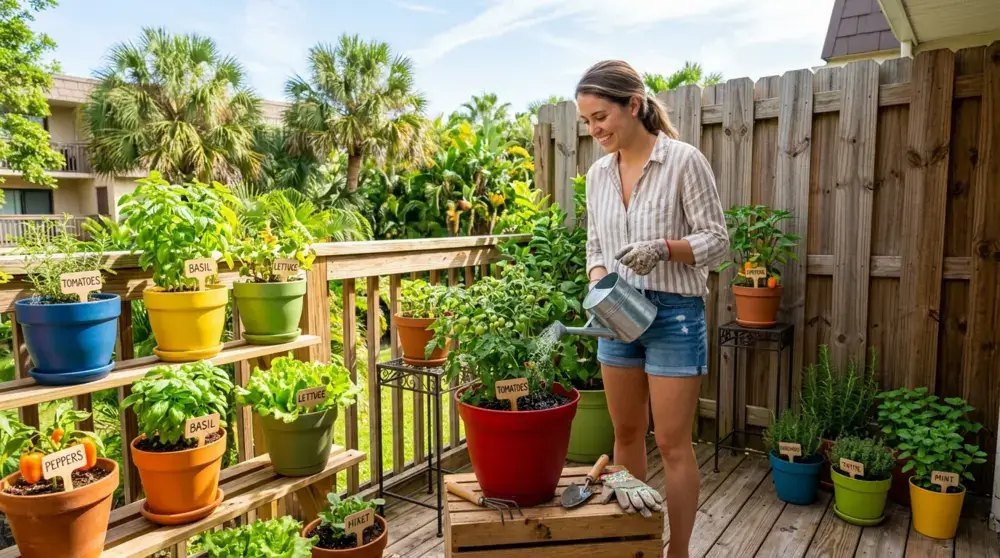
Step 1: Choose Heat-Tolerant Plants
Some plants naturally perform better in high temperatures.
Best Vegetables for Hot Weather
- Cherry tomatoes
- Okra
- Eggplant
- Peppers
- Sweet potatoes
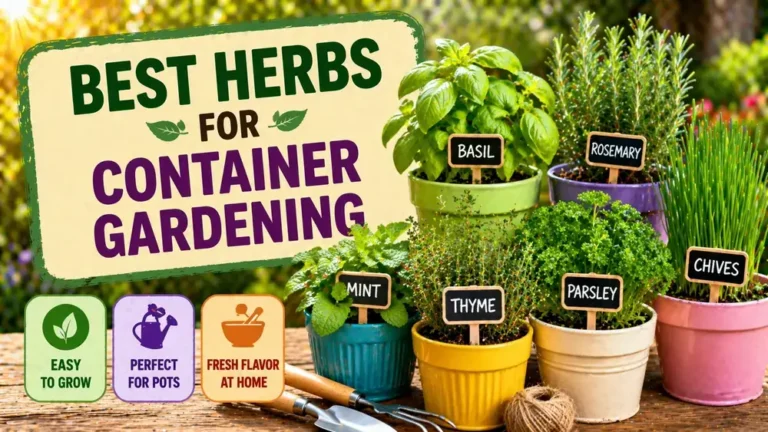
Best Herbs for Summer Heat
- Basil
- Rosemary
- Thyme
- Oregano
- Sage
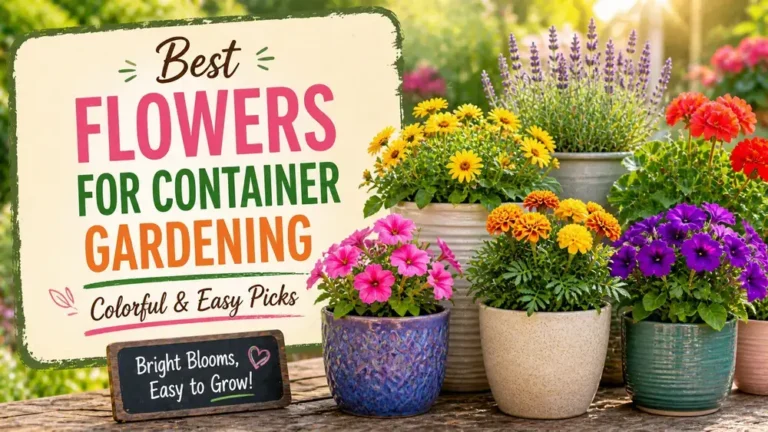
Best Flowers for Hot Climates
- Zinnias
- Marigolds
- Portulaca
- Lantana
- Vinca
These heat tolerant plants pots can handle strong sunlight better than delicate cool-season plants.
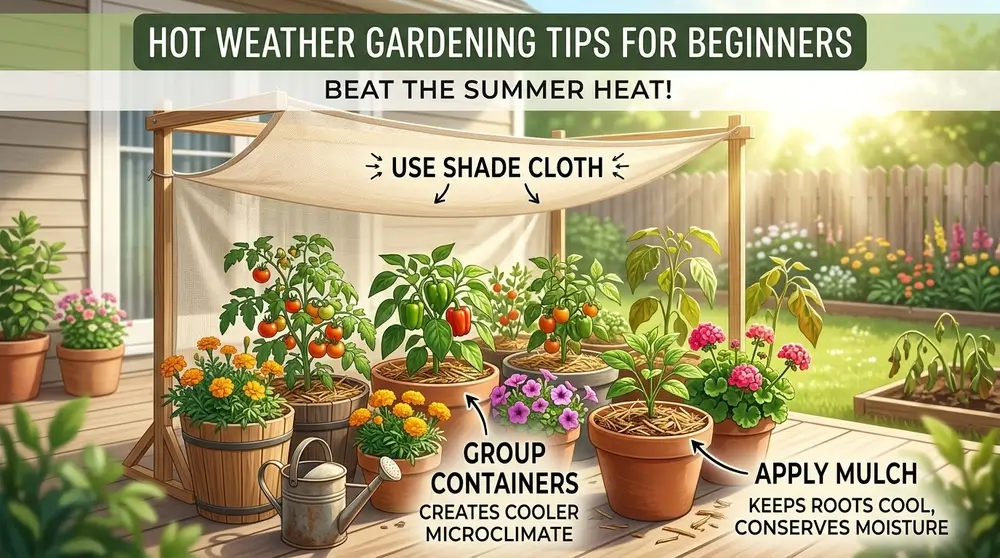
Step 2: Add Mulch to Containers
Mulch is one of the easiest ways to protect container plants from heat stress.
Good mulch options include:
- Straw
- Bark chips
- Coconut husk
- Dry leaves
Mulch reduces water evaporation and keeps soil temperatures lower.
Even a thin 1–2 inch layer can make a noticeable difference during summer.
Step 3: Water Properly
Most beginner mistakes happen during watering. Many people water lightly every day, which encourages shallow roots.
Instead:
- Water deeply until the excess water drains out
- Water early in the morning
- Check soil moisture before watering again
During extreme heat, some containers may need watering twice daily.
The Royal Horticultural Society’s watering guide for containers explains why consistent deep watering is important during hot weather.
You can also read this beginner guide on how often to water container plants for practical watering schedules and signs of underwatering.
Step 4: Protect Plants During Extreme Heat
When temperatures become unusually high, temporary protection helps prevent plant stress.
Easy protection methods:
- Move portable pots into partial shade
- Use shade cloth during the afternoon heat
- Group containers together to reduce moisture loss
- Raise pots slightly for better airflow
Plants growing near walls or concrete may need additional protection because those surfaces radiate extra heat.
Best Hot Weather Gardening Tips for Beginners
Water the Soil, Not the Leaves
Watering leaves during hot afternoons can increase evaporation and sometimes scorch foliage. Focus on watering the soil around the roots.
Avoid Fertilizing During Heat Waves
Fertilizing stressed plants during extreme temperatures can damage roots and increase stress.
Wait until temperatures cool slightly before applying fertilizer.
Rotate Containers Occasionally
Plants may lean toward sunlight or develop uneven growth. Rotating pots every week promotes balanced growth.
Watch for Heat Stress Signs
Common signs include:
- Wilting despite moist soil
- Yellow leaf edges
- Flower drop
- Dry crispy leaves
- Slow growth
Catching these problems early helps prevent permanent damage.
Use Self-Watering Containers
Self-watering containers are especially useful for beginners because they provide steady moisture during hot weather.
They reduce:
- Daily watering stress
- Rapid soil drying
- Moisture fluctuations
Common Mistakes to Avoid
Using Small Containers
Tiny pots may look attractive, but they dry out very quickly in hot climates.
Bigger containers are usually more forgiving for beginners.
Overwatering Every Few Hours
Constant shallow watering weakens roots. Deep watering less often is healthier for plants.
Ignoring Drainage Holes
Containers without drainage holes trap water and cause root rot, even in hot weather.
Growing Cool-Season Plants in Peak Summer
Plants like lettuce, spinach, and pansies struggle in intense summer heat.
Choose plants suited to warm temperatures instead.
Placing Pots on Hot Concrete
Concrete reflects heat back toward the plant roots. Raising containers slightly improves airflow and reduces overheating.
Best Plants for Container Gardening in Hot Climates
| Plant | Heat Tolerance | Beginner Friendly |
|---|---|---|
| Basil | Excellent | Yes |
| Cherry Tomatoes | Excellent | Yes |
| Rosemary | Excellent | Yes |
| Marigolds | Very Good | Yes |
| Eggplant | Excellent | Moderate |
| Lantana | Excellent | Yes |
| Peppers | Very Good | Yes |
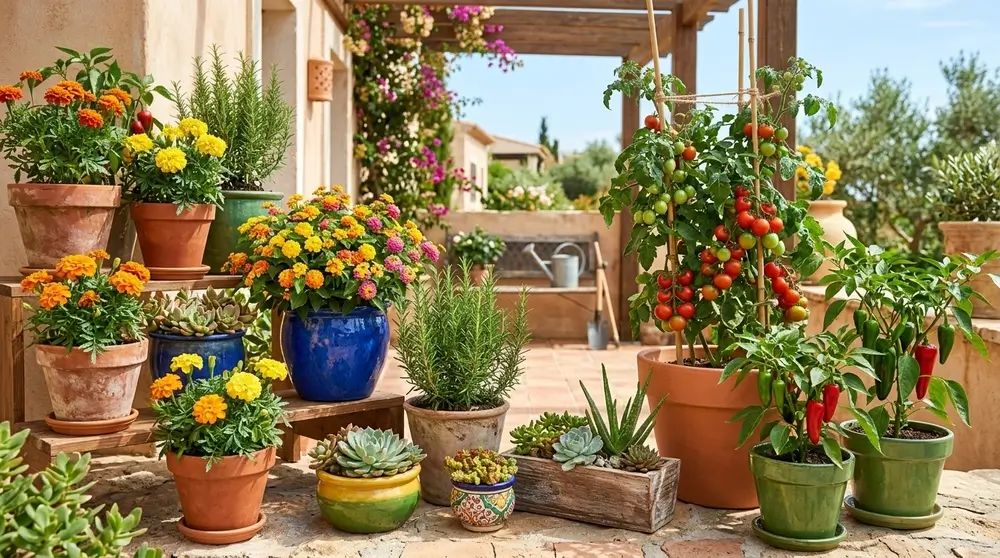
These plants usually perform well with basic plant care in heat conditions.
Tools That Make Summer Container Gardening Easier
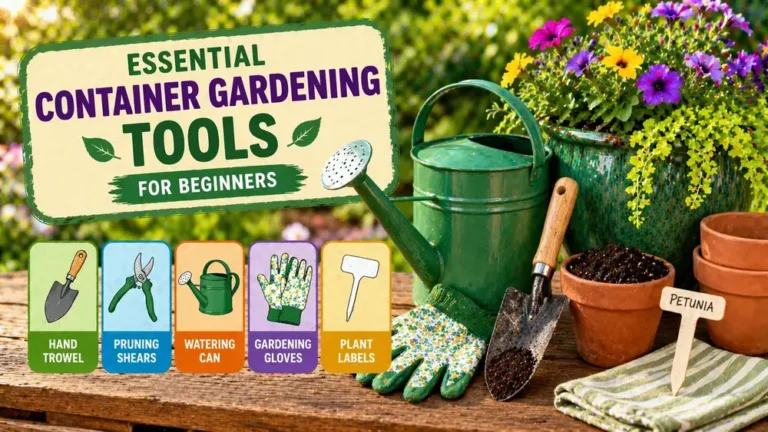
Helpful tools include:
- Watering can with a gentle spray
- Moisture meter
- Mulch scoop
- Self-watering pots
- Shade cloth
- Drip irrigation system
Simple tools reduce beginner mistakes and make daily maintenance easier.
If you are completely new to gardening, this guide on container gardening for beginners explains essential setup steps and beginner-friendly techniques.
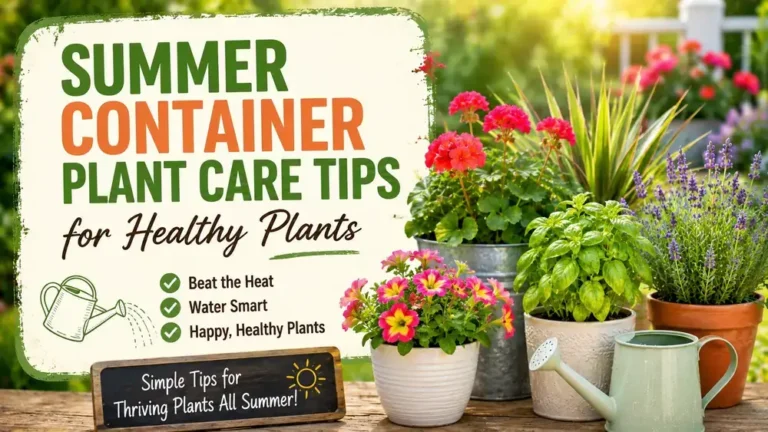
How to Keep Container Plants Alive During Heat Waves
Extreme heat waves require extra attention.
During very hot days:
- Water early morning and late evening if necessary
- Move containers out of direct afternoon sun
- Avoid pruning stressed plants
- Add temporary shade protection
- Check soil moisture twice daily
The University of Minnesota Extension provides additional practical advice for gardening in hot weather, including ways to reduce plant stress during high temperatures.
Conclusion
Container gardening in hot climates becomes much easier when you understand how heat affects soil, roots, and watering needs. Choosing larger containers, using mulch, watering deeply, and selecting heat-tolerant plants can dramatically improve your success.
Beginners often lose plants during summer because containers dry out quickly, but small adjustments can make a huge difference. With proper care and smart planning, you can grow a productive and healthy container garden even during the hottest months of the year.
Start small, monitor your plants daily, and adjust your watering routine based on weather conditions. Over time, you will learn which plants thrive best in your local climate.
Want to improve your container gardening skills even further? Explore our beginner-friendly guides on container gardening for beginners, watering container plants properly, and choosing the best pots for container gardening.
FAQs About Container Gardening in Hot Climates
1. What are the best plants for container gardening in hot climates?
The best plants for container gardening in hot climates are heat-tolerant varieties that can handle strong sunlight and dry conditions. Beginners often have success with basil, rosemary, peppers, cherry tomatoes, marigolds, and lantana. These plants adapt well to warm temperatures and grow reliably in pots when watered properly. Choosing plants suited to your local climate reduces stress and improves your chances of success.
2. How often should I water container plants in hot weather?
In container gardening in hot climates, watering needs depend on temperature, container size, and plant type. Most plants need deep watering once daily during summer, while small pots may require watering twice a day during heat waves. Always check the top 1–2 inches of soil before watering. Early morning watering helps plants absorb moisture before the afternoon heat arrives.
3. Which type of container is best for hot climates?
Large, light-colored containers work best for container gardening in hot climates because they keep roots cooler and retain moisture longer. Glazed ceramic pots, wooden planters, and fabric grow bags are good choices for beginners. Avoid thin black plastic pots if possible because they absorb heat quickly and can dry out soil much faster during summer afternoons.
4. How can I stop container plants from drying out too quickly?
To prevent fast drying during container gardening in hot climates, use mulch around the soil surface and choose larger containers with quality potting mix. Grouping pots together also helps reduce moisture loss. Self-watering containers can make a big difference for beginners, especially during very hot weeks. Placing plants where they receive morning sun and afternoon shade also protects them from extreme heat.
5. Can beginners start container gardening during the summer?
Yes, beginners can absolutely start container gardening in hot climates during summer if they choose the right plants and watering routine. Start with low-maintenance heat-tolerant plants such as herbs, peppers, or marigolds. Focus on deep watering, proper drainage, and using larger containers. Even small balcony or patio gardens can thrive in summer with a little daily care and observation.