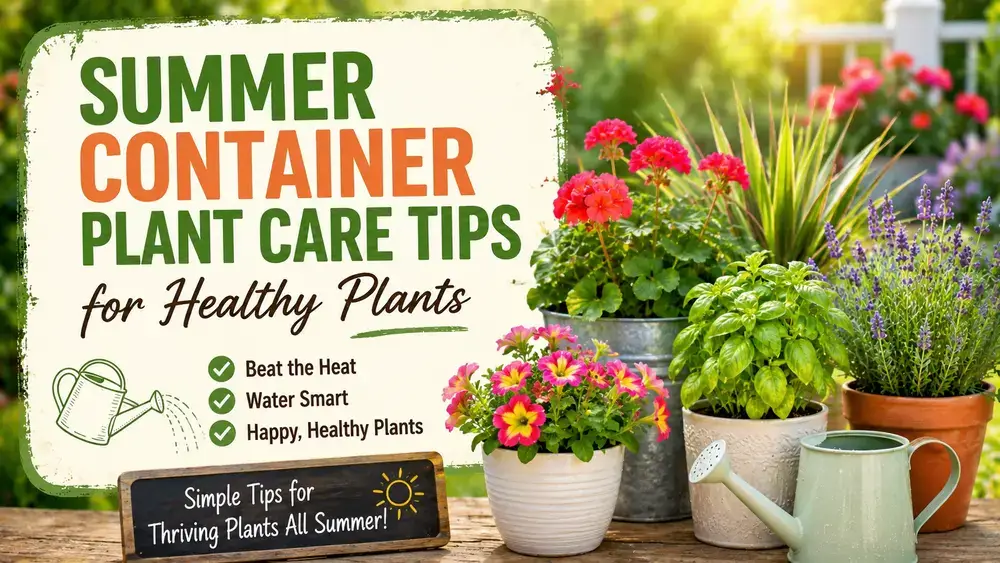
Summer Container Plant Care Tips for Healthy Plants
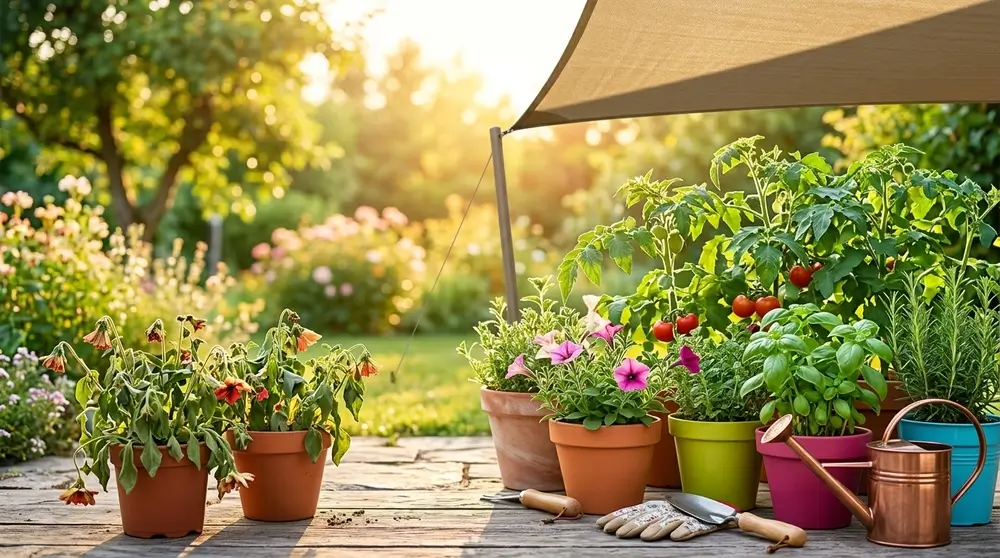
Summer can be tough on container plants. Unlike garden beds, pots dry out quickly, heat up faster, and leave plant roots exposed to intense temperatures. Many beginner gardeners notice wilting leaves, dry soil, faded flowers, or even dead plants during hot weather. The good news is that a few simple changes can make a huge difference.
This guide covers practical and beginner-friendly summer container plant care tips to help your plants survive and thrive during heatwaves. You will learn how to water correctly, protect plants from heat stress, choose the right containers, improve soil moisture retention, and avoid common summer gardening mistakes. Whether you grow herbs, flowers, vegetables, or small fruits, these tips will help keep your container garden healthy all season long.
Quick Answer
The best way to protect container plants during summer is to water deeply, reduce direct afternoon heat, use moisture-retaining soil, and choose containers that stay cooler in the sun. Regular monitoring is important because potted plants lose water much faster than plants growing in the ground.
Why Container Plants Struggle in Summer
Container plants face harsher conditions than traditional garden plants during hot weather. Small amounts of soil heat up quickly, and moisture evaporates fast from pots exposed to direct sunlight.
Common summer problems include:
- Dry and cracked soil
- Wilting leaves during midday
- Burnt leaf edges
- Slow growth
- Flower drop
- Heat stress plants showing yellow or curled leaves
Dark-colored pots and small containers are especially vulnerable because they absorb more heat.
According to the University of Minnesota Extension, containers may require daily watering during summer because warm temperatures increase evaporation and plant water use.
Best Summer Container Plant Care Tips
Water Deeply and Consistently
Proper watering is the most important part of summer container plant care. Many beginners water lightly, which only wets the top layer of soil. Shallow watering causes weak root systems and faster drying.
Instead:
- Water slowly until water drains from the bottom
- Water early in the morning
- Check soil moisture daily
- Avoid watering during the hottest afternoon hours
In extreme heat, some plants may need watering twice a day.
If you are unsure how often to water different plants, this guide on how often to water container plants explains watering frequency in detail.
Signs Your Plants Need Water
Look for these early warning signs:
- Drooping leaves
- Dry topsoil
- Lightweight pots
- Crispy leaf edges
- Flowers closing early
Do not wait until plants completely collapse from dehydration.
Use the Right Potting Soil
Good soil helps retain moisture while still draining properly. Cheap garden soil often becomes compacted in containers and dries unevenly.
A quality potting mix should contain:
- Coconut coir or peat moss for moisture retention
- Perlite for drainage
- Compost for nutrients
Avoid using heavy backyard soil in pots.
You can learn more about choosing the best soil for container gardening to improve summer plant health.
Add Mulch to Reduce Water Loss
Mulching container plants is one of the easiest ways to keep roots cooler.
Good mulch materials include:
- Straw
- Wood chips
- Coconut husk
- Dry leaves
A thin mulch layer reduces evaporation and protects soil from direct sun exposure.
Move Plants Away from Harsh Afternoon Sun
Not all plants enjoy full summer sun all day long. Afternoon heat is often more damaging than morning sunlight.
During heatwaves:
- Move pots to shaded patios
- Use shade cloth
- Place taller plants behind sensitive plants
- Shift containers under trees during peak heat
This is especially helpful for lettuce, spinach, herbs, and flowering plants.
The University of California Agriculture and Natural Resources recommends temporary shade during heatwaves to reduce stress and water loss in potted plants.
Choose Better Containers for Hot Weather
The type of container you use greatly affects plant survival in summer.
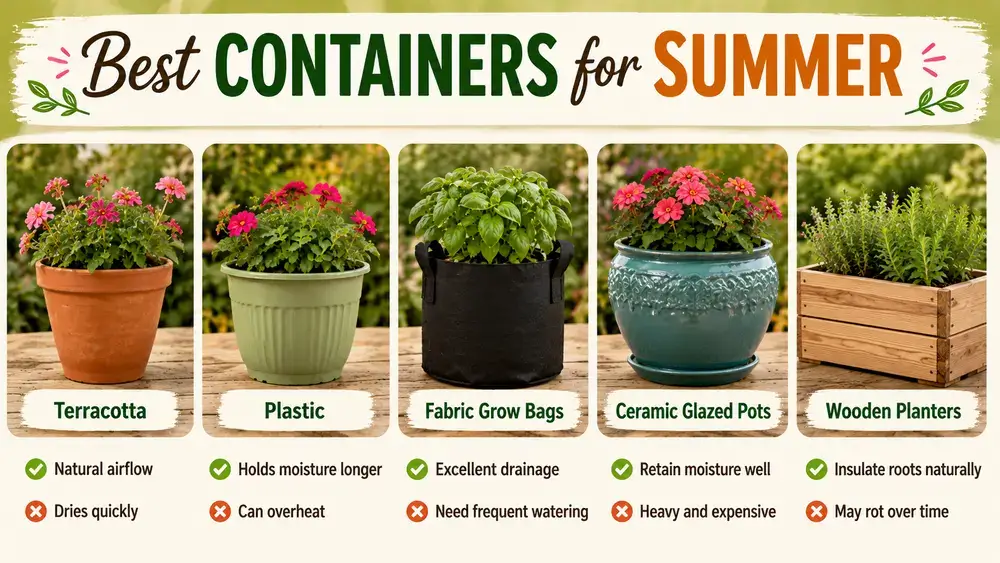
Best Containers for Summer
| Container Type | Benefits | Drawbacks |
|---|---|---|
| Terracotta | Natural airflow | Dries quickly |
| Plastic | Holds moisture longer | Can overheat |
| Fabric Grow Bags | Excellent drainage | Need frequent watering |
| Ceramic Glazed Pots | Retain moisture well | Heavy and expensive |
| Wooden Planters | Insulate roots naturally | May rot over time |
Light-colored containers stay cooler than black or dark pots.
Large pots are also better because they hold more soil and moisture.
Protect Plants During Heatwaves
Extreme heat can quickly damage container gardens. Heat stress plants often show wilted leaves even after watering because the roots become too hot.
Simple Heat Protection Methods
- Group pots together to create humidity
- Use plant stands to improve airflow
- Place saucers under pots temporarily during heatwaves
- Mist plants lightly in the early morning
- Avoid fertilizing during extreme heat
If you live in a warm region, this article on container gardening in hot climates offers extra strategies for growing successfully in high temperatures.
Feed Plants Carefully During Summer
Summer growth requires nutrients, but overfeeding stressed plants can cause root burn.
Follow these simple rules:
- Use diluted liquid fertilizer every 2 to 4 weeks
- Fertilize during cooler morning hours
- Avoid heavy feeding during heatwaves
- Water plants before fertilizing
Vegetables and flowering plants usually need more nutrients than succulents or herbs.
The University of Maryland Extension recommends regular feeding for container vegetables because nutrients wash out faster with frequent watering.
Best Plants for Hot Summer Containers
Some plants naturally tolerate heat better than others. Choosing heat-resistant varieties makes summer gardening much easier.
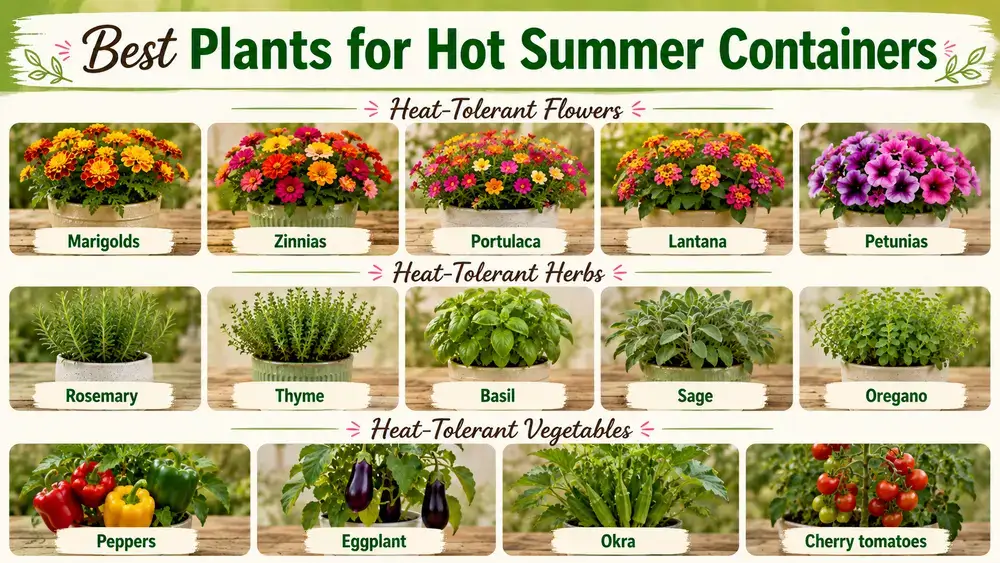
Heat-Tolerant Flowers
- Marigolds
- Zinnias
- Portulaca
- Lantana
- Petunias
Heat-Tolerant Herbs
- Rosemary
- Thyme
- Basil
- Sage
- Oregano
Heat-Tolerant Vegetables
- Peppers
- Eggplant
- Okra
- Cherry tomatoes
These plants usually recover faster from hot conditions and require less maintenance.
Common Summer Container Gardening Mistakes
Many beginner gardeners accidentally damage plants during the summer without realizing it.
Overwatering
Too much water can suffocate roots and cause root rot. Soil should feel moist, not muddy.
Using Small Pots
Tiny containers dry out too quickly in hot weather.
Ignoring Drainage
Containers without drainage holes trap water and damage roots.
Fertilizing Dry Soil
Applying fertilizer to dry soil can burn roots immediately.
Leaving Pots on Hot Concrete
Concrete and stone surfaces reflect heat upward and increase soil temperatures.
Morning vs Evening Watering
Many gardeners wonder which watering time works best.
| Time | Advantages | Disadvantages |
|---|---|---|
| Morning | Less evaporation, healthier plants | Requires early routine |
| Evening | Convenient after work | Can encourage fungal issues overnight |
Morning watering is usually the safest option for plant care in summer routines.
Extra Tips for Healthy Summer Containers
Rotate Pots Weekly
Rotating containers helps plants grow evenly and prevents one side from overheating.
Clean Dead Leaves Regularly
Removing damaged leaves improves airflow and reduces disease risk.
Check Pots After Windy Days
Wind dries soil faster than many gardeners expect.
Use Self-Watering Containers
These containers help maintain stable moisture levels during hot weather.
Raise Pots Off the Ground
Pot feet or stands improve drainage and reduce heat transfer from pavement.
How to Tell if Plants Are Recovering
Healthy recovery signs include:
- Firm leaves in the morning
- New flower buds
- Moist soil staying stable longer
- Bright green growth
- Upright stems
Some plants may temporarily wilt during extreme afternoon heat but recover by evening. This is normal unless wilting continues overnight.
Conclusion
Successful summer container plant care is all about protecting roots, managing moisture, and reducing heat stress. Small changes like watering deeply, choosing better containers, adding mulch, and providing afternoon shade can dramatically improve plant survival during hot weather.
Container gardening does not have to become stressful during summer. Once you understand how heat affects potted plants, it becomes much easier to keep flowers, vegetables, and herbs healthy throughout the season.
Start by checking your containers today. A few simple adjustments now can save your plants from serious summer damage later.
Want to improve your container garden even more? Explore our helpful beginner guides on watering container plants, choosing the best soil mixes, and growing plants successfully in hot climates. You can also subscribe to Gardening Note for more practical gardening tips throughout the year.
FAQs About Summer Container Plant Care
1. How often should I water container plants during summer?
Most container plants need watering at least once a day during hot summer weather. Small pots and plants in direct sunlight may even need water twice daily. For effective summer container plant care, always check the soil first by inserting your finger about 1–2 inches deep. If the soil feels dry, water deeply until excess water drains from the bottom of the pot.
2. What are the signs of heat stress in container plants?
Heat stress plants often show drooping leaves, brown edges, faded flowers, or dry soil that pulls away from the sides of the pot. Some plants may also stop growing during extreme heat. A good summer container plant care routine includes moving sensitive plants to partial shade and adding mulch to help roots stay cooler and retain moisture longer.
3. Can container plants get too much sun in summer?
Yes, many container plants can suffer from too much intense afternoon sun, especially during heatwaves. Even sun-loving plants may struggle when temperatures become extreme. For better summer container plant care, try placing pots where they receive morning sunlight and light afternoon shade. This helps reduce water loss and protects leaves from sun scorch.
4. What type of pots are best for summer container gardening?
Large, light-colored containers are usually best because they keep roots cooler and hold moisture longer. Terracotta pots allow airflow but dry out quickly, while plastic and glazed ceramic containers retain moisture better. Choosing the right pot is an important part of summer container plant care because overheated roots can quickly damage healthy plants.
5. Should I fertilize container plants during very hot weather?
It is better to avoid heavy fertilizing during extreme heat because stressed plants may struggle to absorb nutrients properly. Instead, use a diluted liquid fertilizer during cooler morning hours every few weeks. A balanced feeding routine supports healthy summer container plant care without causing fertilizer burn or additional stress to the roots.