Low Maintenance Container Plants for Busy Beginners
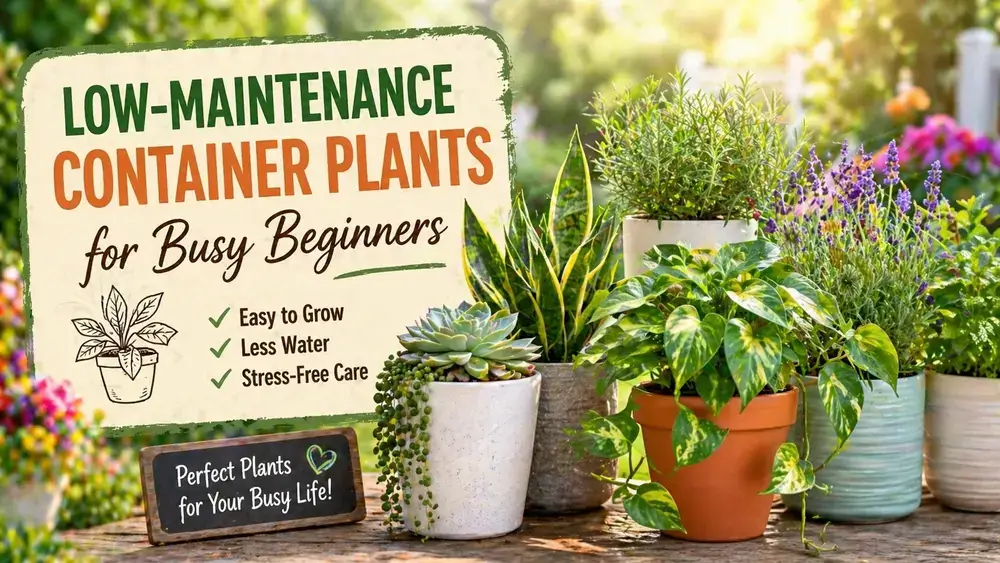
If you love plants but struggle to keep them alive, you are not alone. Many beginners give up on gardening because it feels time-consuming or difficult. The good news is that choosing the right low maintenance container plants can make gardening simple, even with a busy schedule.
Container gardening is flexible, space-saving, and perfect for beginners who want results without constant care. In this guide, you will learn how to start, what plants to choose, and how to keep them thriving with minimal effort.
Quick Answer
Low maintenance container plants are species that require minimal watering, pruning, and attention. The best options include succulents, herbs, and hardy flowering plants that tolerate neglect and grow well in pots.
What Is Container Gardening and Why It Works for Beginners
Container gardening means growing plants in pots instead of the ground. It is ideal for small spaces like balconies, patios, or even indoor corners.
According to the RHS container gardening guide, containers give you full control over soil, water, and sunlight, which makes plant care easier and more predictable.
Why Busy Beginners Prefer It
- Less weeding and maintenance
- Easy to move plants around
- Better control over watering
- Works in small or rented spaces
If you are completely new, this beginner guide on how to start container gardening can help you understand the basics before choosing plants.
Step-by-Step: How to Start a Low-Maintenance Container Garden
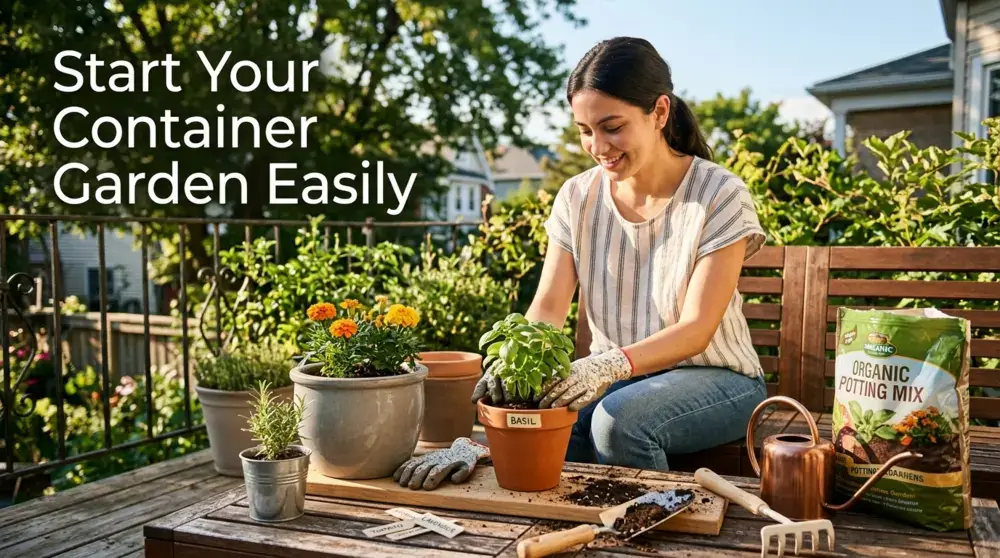
1. Choose the Right Containers
Pick pots with drainage holes. This prevents root rot, which is one of the most common beginner mistakes.
Best options:
- Plastic pots (lightweight and retain moisture)
- Terracotta pots (good airflow but dry faster)
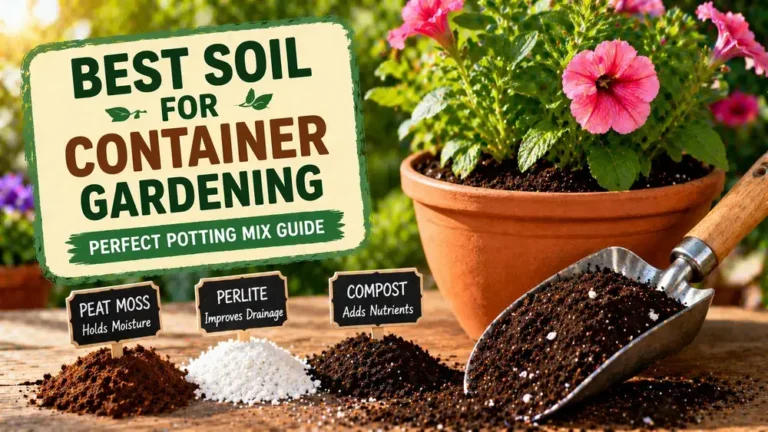
2. Use Quality Potting Mix
Avoid garden soil. It becomes compact in containers. Instead, use a well-draining potting mix that allows roots to breathe.
3. Pick the Right Location
Place your containers based on plant needs:
- Full sun: herbs, succulents
- Partial shade: leafy plants
- Indoors: low-light plants
4. Water Smart, Not Often
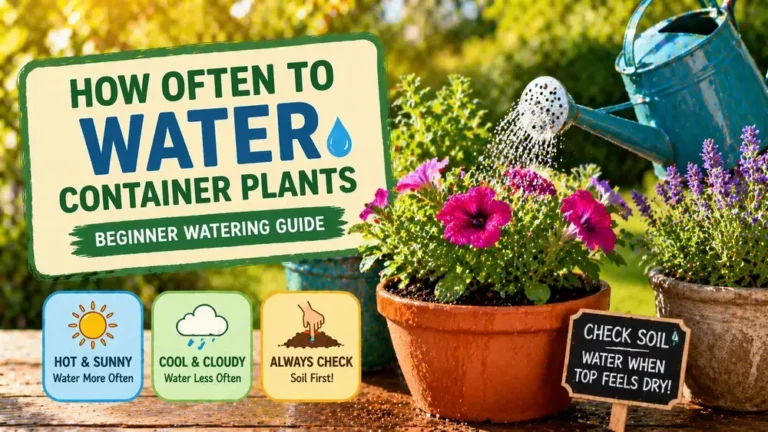
Most beginners overwater plants. A simple rule is to check soil before watering.
If you are unsure, this guide on how often to water container plants explains it clearly.
5. Choose Low Maintenance Plants
This is the most important step. The right plant reduces your workload by half.
Best Low Maintenance Container Plants for Busy Beginners
Here are reliable, beginner-friendly options that thrive with minimal care:
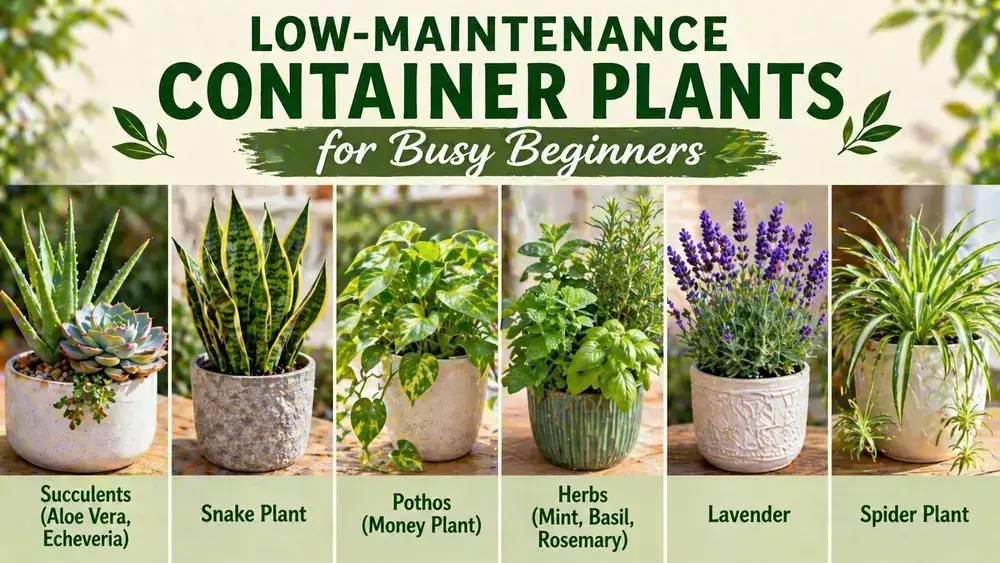
1. Succulents (Aloe Vera, Echeveria)
- Need very little water
- Thrive in sunlight
- Perfect for forgetful gardeners
2. Snake Plant
- Tolerates low light
- Needs watering every 2–3 weeks
- Very hard to kill
3. Pothos (Money Plant)
- Grows in low to medium light
- Survives irregular watering
- Great for indoors
4. Herbs (Mint, Basil, Rosemary)
- Easy to grow and useful in cooking
- Require moderate sunlight
- Low effort once established
5. Lavender
- Loves sun and dry soil
- Requires minimal watering
- Adds fragrance and beauty
6. Spider Plant
- Adapts easily to different conditions
- Produces new plants naturally
- Low maintenance and fast growing
If you prefer quicker results, you can also explore these fast-growing container plants for visible progress in less time.
Comparison Table: Easy Plants for Beginners
| Plant Type | Water Needs | Light Needs | Difficulty Level |
|---|---|---|---|
| Succulents | Very low | Full sun | Very easy |
| Snake Plant | Low | Low to medium | Very easy |
| Pothos | Low | Low to medium | Easy |
| Herbs | Medium | Full sun | Easy |
| Lavender | Low | Full sun | Easy |
| Spider Plant | Low | Indirect light | Easy |
Beginner Tips for Low Care Potted Plants
Keep It Simple
Start with 2–3 plants instead of filling your entire space. This helps you learn without feeling overwhelmed.
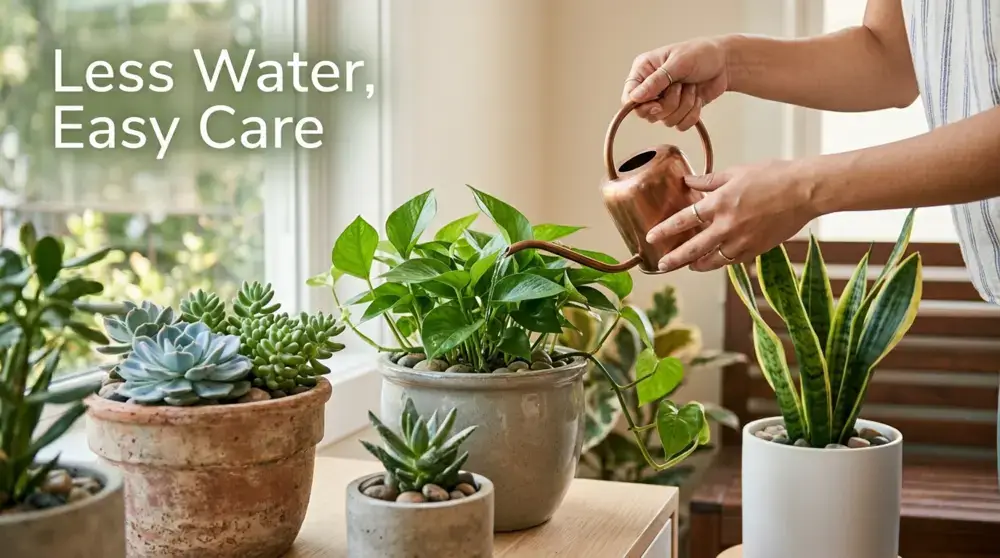
Use Self-Watering Pots
These are excellent for busy people. They reduce watering frequency and keep soil moisture balanced.
Group Plants with Similar Needs
Do not mix high-water plants with low-water ones. It makes care confusing.
Feed Occasionally
Use a balanced liquid fertilizer once a month during the growing season.
Follow Reliable Guidelines
The RHS guide on growing plants in containers explains practical care techniques like feeding and repotting.
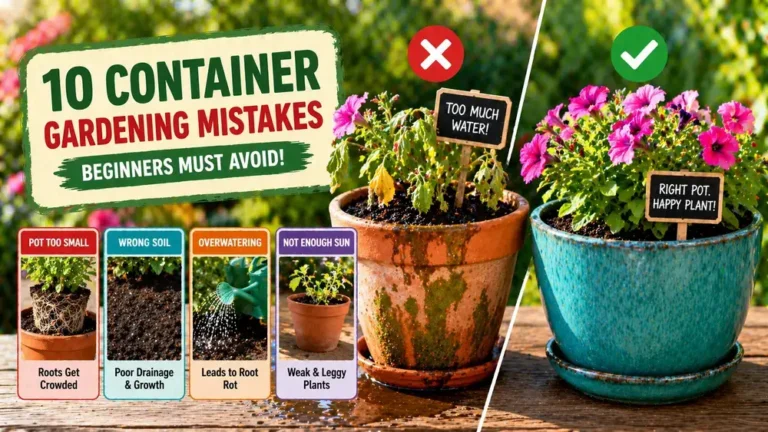
Common Mistakes to Avoid
Overwatering
This is the number one mistake. Many plants die from too much water, not too little.
Using the Wrong Soil
Garden soil is too heavy for pots and blocks drainage.
Choosing High-Maintenance Plants
Avoid plants that need constant pruning or daily watering.
Ignoring Sunlight Needs
Placing a sun-loving plant in shade will slow growth or kill it.
Using Pots Without Drainage
Always check for holes at the bottom of your containers.
Smart Tips for Plants That Need Less Water
If you want to reduce effort even further, focus on drought-tolerant plants.
Best Practices
- Use mulch to retain moisture
- Choose deep containers to hold more water
- Water early in the morning
Research from the University of California container gardening basics highlights that proper soil and container selection can significantly reduce watering needs.
How to Maintain Your Container Garden with Minimal Effort
Once your plants are set up, maintenance becomes simple.
Weekly Routine
- Check soil moisture
- Remove dead leaves
- Rotate pots for even sunlight
Monthly Routine
- Light fertilizing
- Check for pests
- Clean containers if needed
Seasonal Care
- Move plants indoors during extreme weather
- Repot if roots outgrow containers
Conclusion
Starting a container garden does not have to be complicated or time-consuming. By choosing the right low maintenance container plants, you can enjoy greenery without constant effort.
Focus on simple plant choices, proper watering habits, and basic care routines. Even with a busy lifestyle, you can build a thriving container garden that looks great and feels rewarding.
Ready to begin your gardening journey? Start small and explore beginner-friendly guides like container gardening basics, watering tips, and fast-growing plant ideas on Gardening Note. With the right approach, you can grow plants successfully without stress.
FAQs About Low Maintenance Container Plants
1. What are the easiest low maintenance container plants for beginners?
The easiest low maintenance container plants include succulents, snake plants, pothos, and herbs like mint or rosemary. These plants tolerate irregular watering and adapt well to different light conditions. If you are just starting, choose one or two of these and place them in a bright spot. Avoid overwatering, as most beginner-friendly plants prefer slightly dry soil between watering.
2. How often should I water low maintenance container plants?
Most low maintenance container plants only need watering when the top inch of soil feels dry. For many plants, this means once a week or even less. Always check the soil instead of following a fixed schedule. Overwatering is a common mistake, so it is better to water less frequently but thoroughly when needed.
3. Can low maintenance container plants survive indoors?
Yes, many low maintenance container plants grow very well indoors. Plants like snake plant, pothos, and spider plant can tolerate low to medium light and do not need frequent care. Place them near a window with indirect sunlight and rotate the pots occasionally to ensure even growth.
4. What type of soil is best for low maintenance container plants?
Well-draining potting mix is essential for low maintenance container plants. Avoid using garden soil, as it becomes compact and holds too much water. A good potting mix allows air to reach the roots and prevents waterlogging. For succulents, use a mix designed for cacti to improve drainage further.
5. How can I make container gardening easier with less effort?
To simplify care, choose low maintenance container plants and use self-watering pots or add mulch to retain moisture. Group plants with similar needs together so watering and care become easier. Also, place your containers where they receive the right amount of light, reducing the need for constant adjustments.