How to Start a Container Garden at Home (Easy Beginner Guide)
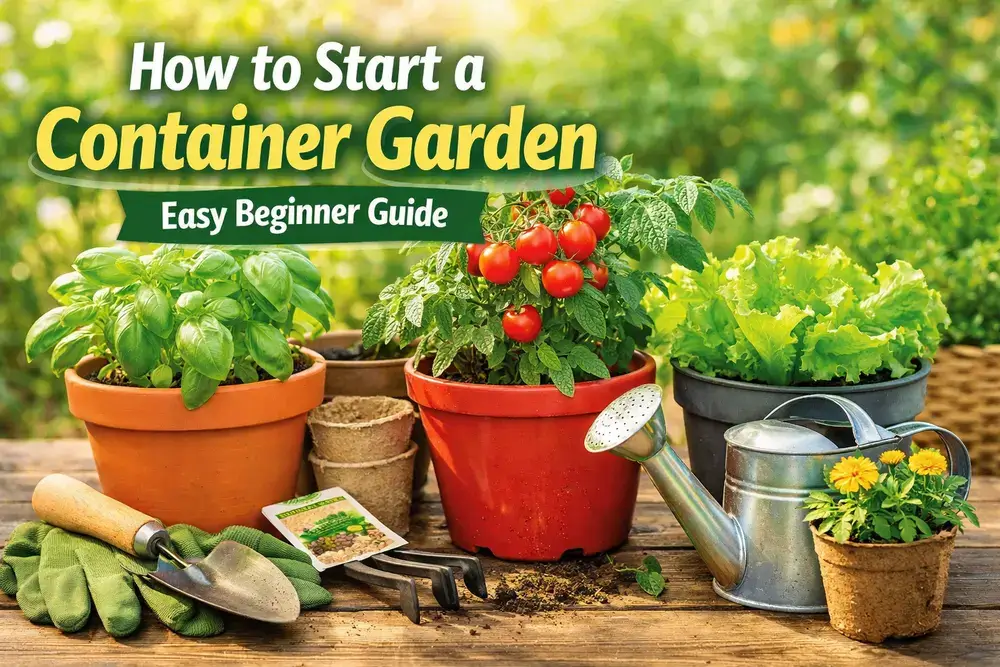
If you have ever thought about growing your own plants but felt limited by space, container gardening is the simplest place to begin. Whether you live in an apartment, have a small balcony, or just want a low-maintenance setup, learning how to start a container garden can open the door to fresh herbs, vegetables, and beautiful plants right at home.
This guide walks you through everything step by step, from choosing containers and soil to selecting the right plants and avoiding common beginner mistakes. By the end, you will have a clear, practical plan to create your own thriving container garden, even if you have never grown a plant before.
Quick Answer
To start a container garden, choose a sunny location, pick the right containers with drainage, use quality potting soil, and grow beginner-friendly plants like herbs or leafy greens. Water regularly and adjust based on plant needs.
What Is Container Gardening and Why Start?
Container gardening simply means growing plants in pots instead of directly in the ground. It is ideal for beginners because it gives you full control over soil, watering, and plant placement.
Here is why it works so well:
- Perfect for small space gardening, like balconies and patios
- Easier to manage than traditional gardens
- Fewer weeds and soil-related issues
- Flexible and portable setup
If you are working with limited space, this approach is the foundation of a successful beginner garden setup.
How to Start a Container Garden Step by Step
1. Choose the Right Location
Start by observing how much sunlight your space receives. Most vegetables and herbs need at least 6 to 8 hours of direct sunlight.
Good locations include:
- Balconies with open sunlight
- Windowsills facing south or west
- Patios or small outdoor corners
If your space gets partial sunlight, choose plants that tolerate shade, such as lettuce or mint.
For a deeper understanding of how container placement affects growth, the Royal Horticultural Society’s container gardening guide explains light and positioning clearly.
2. Select the Best Containers
The container you choose directly affects plant health. Size, material, and drainage all matter.
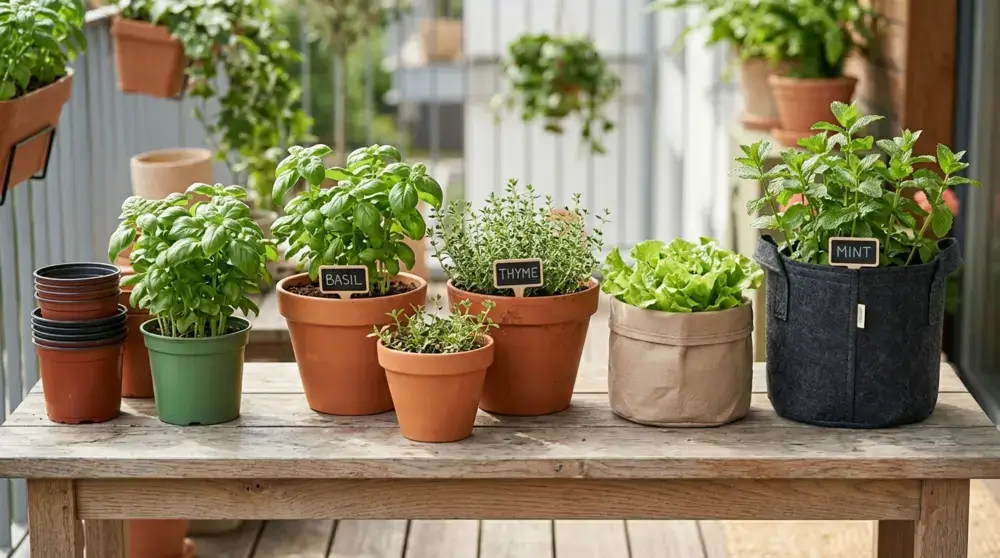
Key things to look for:
- Drainage holes at the bottom
- Enough depth for root growth
- Lightweight if you plan to move them
Here is a quick comparison:
| Container Type | Pros | Cons |
|---|---|---|
| Plastic Pots | Lightweight, affordable | Can heat up quickly |
| Clay Pots | Breathable, natural look | Dry out faster |
| Fabric Grow Bags | Great drainage, flexible | Less durable long term |
If you are unsure what to choose, this guide on best pots for container gardening will help you match containers to your plants.
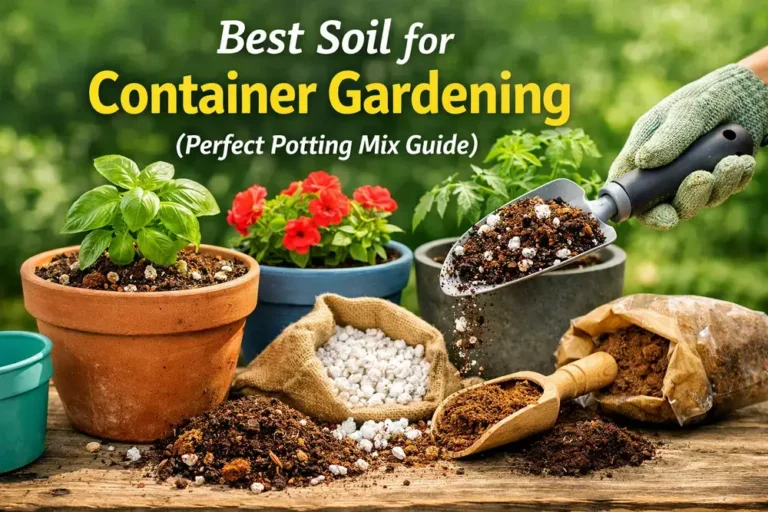
3. Use the Right Soil (Not Garden Soil)
One of the biggest beginner mistakes is using regular garden soil. It compacts easily and blocks drainage.
Instead, use a quality potting mix that:
- Drains well
- Holds enough moisture
- Provides nutrients
A good mix usually contains peat, compost, and perlite.
If you want to get this right from the start, read this detailed guide on choosing the best soil for container gardening.
4. Choose Beginner-Friendly Plants
Start simple. Some plants are much easier to grow in containers than others.
Best plants for beginners:
- Herbs: basil, mint, parsley
- Vegetables: cherry tomatoes, lettuce, spinach
- Flowers: marigolds, petunias
These plants grow quickly and are forgiving if you make small mistakes.
According to the Clemson University container vegetable gardening guide, compact and fast-growing crops perform best in containers, especially for beginners.
5. Plant Properly
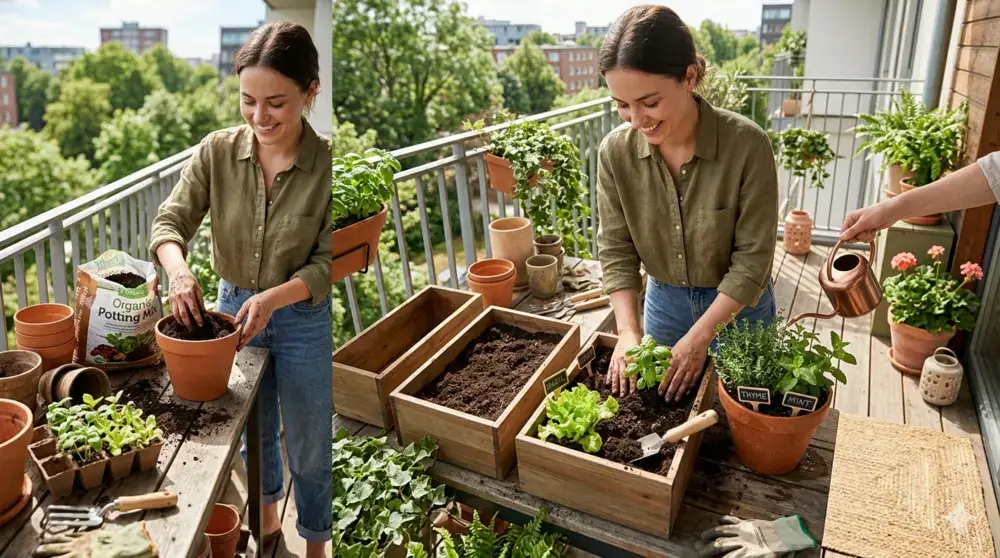
Once you have your container, soil, and plants ready, follow these simple steps:
- Fill the container with potting mix
- Leave about 2–3 cm space at the top
- Place the plant gently and cover the roots with soil
- Press lightly to secure
Avoid planting too deeply, especially for herbs and leafy greens.
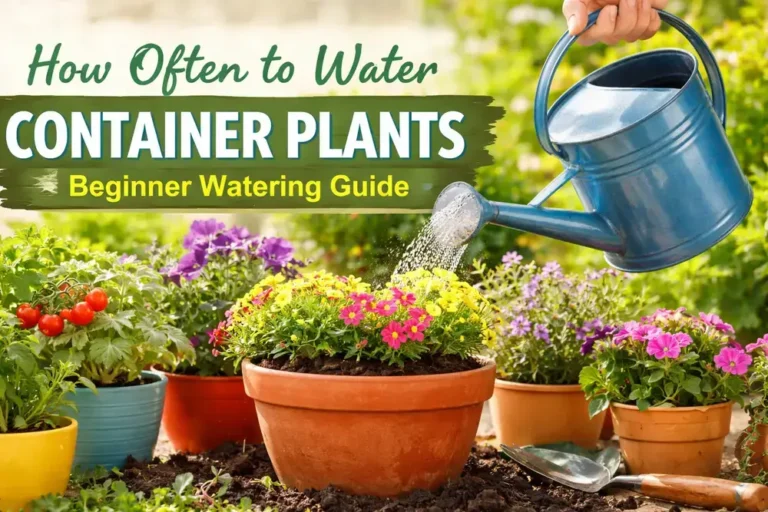
6. Water Correctly
Watering is where most beginners struggle. Both overwatering and underwatering can harm plants.
Basic rule:
- Water when the top inch of soil feels dry
Signs your plant needs water:
- Dry soil
- Drooping leaves
Signs of overwatering:
- Yellow leaves
- Soggy soil
Containers dry out faster than ground soil, so check them daily, especially in warm weather.
7. Feed Your Plants
Container plants rely entirely on you for nutrients.
Use:
- Liquid fertilizer every 2–3 weeks
- Organic compost if available
Over time, nutrients in potting soil get depleted, so feeding is essential for healthy growth.
For a broader overview of setup and care, you can also explore this complete container gardening for beginners guide.
Beginner Tips for Success
Starting strong makes a big difference. These simple tips can save you time and frustration:
- Start with 2–3 containers instead of many
- Group plants with similar watering needs
- Rotate pots weekly for even sunlight
- Use saucers to prevent water mess indoors
- Label your plants to track growth
If you are following a balcony gardening guide, spacing and airflow are especially important. Avoid overcrowding your pots.
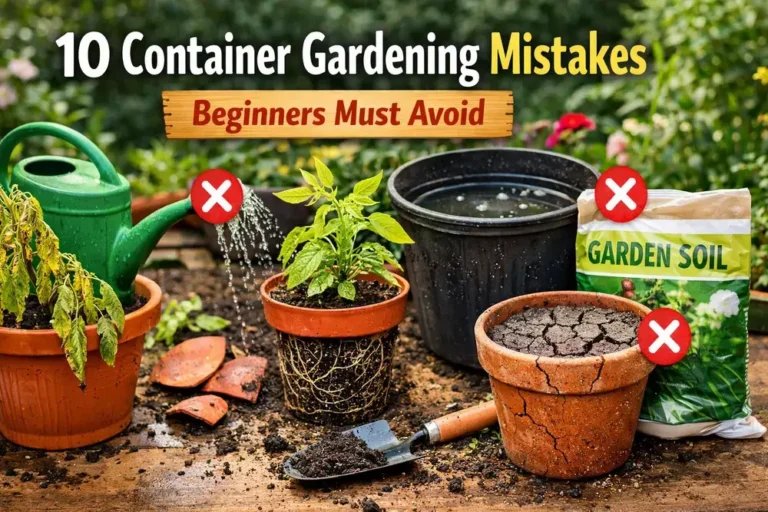
Common Mistakes to Avoid
Even simple mistakes can slow down your progress. Here are the most common ones:
Using the Wrong Container Size
Small pots restrict root growth and dry out quickly. Always match the pot size to the plant.
Poor Drainage
No drainage holes lead to root rot. Always check the base of your container.
Overwatering
More water does not mean better growth. It often leads to root damage.
Ignoring Sunlight Needs
Plants placed in the wrong light conditions will struggle no matter how well you care for them.
Planting Too Much Too Soon
Start small and scale up once you gain confidence.
Best Plants for Container Gardening at Home
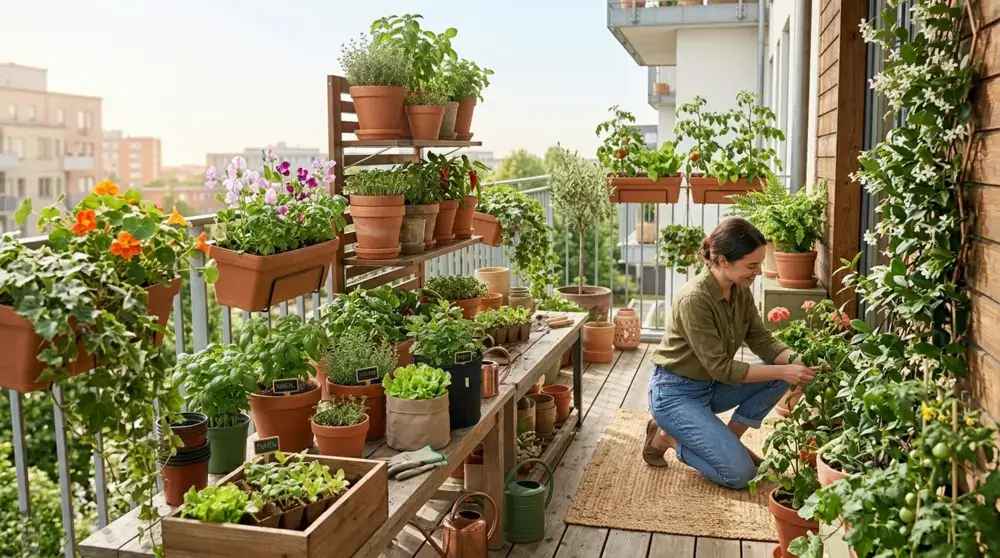
Here is a quick guide to help you choose based on your space:
| Space Type | Recommended Plants |
|---|---|
| Balcony | Tomatoes, herbs, peppers |
| Indoors | Herbs, leafy greens |
| Small patio | Strawberries, spinach, flowers |
If you are just starting container gardening at home, herbs are often the easiest and most rewarding choice.
Tools You Actually Need (Keep It Simple)
You do not need expensive tools to begin. A few basics are enough:
- Watering can
- Hand trowel
- Pruning scissors
- Good quality containers
Keep your setup simple. You can always upgrade later.
Practical Setup Example (Beginner Friendly)
Here is a simple setup you can follow today:
- 3 medium-sized pots
- Potting mix
- Basil, mint, and cherry tomato plants
- Watering can
Place them in a sunny spot and water regularly. Within weeks, you will start seeing growth, which builds confidence quickly.
Conclusion
Starting a container garden is one of the easiest ways to grow plants at home, even with limited space. Once you understand the basics like choosing the right containers, using proper soil, and watering correctly, the process becomes simple and enjoyable.
You do not need a large garden or advanced skills. A few pots, the right plants, and consistent care are enough to get started. The key is to begin small, learn as you go, and enjoy the process.
If you are ready to take the next step, explore our detailed guides on choosing the right soil and containers to improve your results. You can also browse more beginner-friendly tips on Gardening Note to grow your confidence and expand your garden over time.
FAQs – Container Gardening
1. What is the easiest way to start a container garden at home?
The easiest way to learn how to start a container garden is to begin small with 2–3 pots, good-quality potting mix, and simple plants like basil or lettuce. Choose a sunny spot, ensure your containers have drainage holes, and water when the top soil feels dry. Starting simple helps you build confidence and avoid common beginner mistakes.
2. What containers are best for beginners?
When learning how to start a container garden, choose containers that are at least 20–30 cm deep with proper drainage holes. Plastic pots are lightweight and affordable, while fabric grow bags offer excellent drainage. Avoid very small pots, as they dry out quickly and restrict root growth, making plant care more difficult.
3. How often should I water container plants?
Watering depends on weather, plant type, and container size. A simple rule when starting a container garden is to check the top inch of soil daily. If it feels dry, water thoroughly until excess drains out. In warm conditions, you may need to water once a day, while cooler weather requires less frequent watering.
4. What are the best plants for beginner container gardening?
If you are figuring out how to start a container garden, begin with easy, fast-growing plants like herbs, leafy greens, or cherry tomatoes. These plants adapt well to containers and grow quickly, which keeps beginners motivated. Avoid large or deep-rooted plants until you gain more experience.
5. Can I start a container garden without a balcony or outdoor space?
Yes, you can still learn how to start a container garden indoors. Place containers near a bright window that receives at least 4–6 hours of sunlight. Herbs like mint, parsley, and chives grow well indoors. If natural light is limited, consider using a simple grow light to support healthy plant growth.