Best Soil for Container Gardening (Perfect Potting Mix Guide)
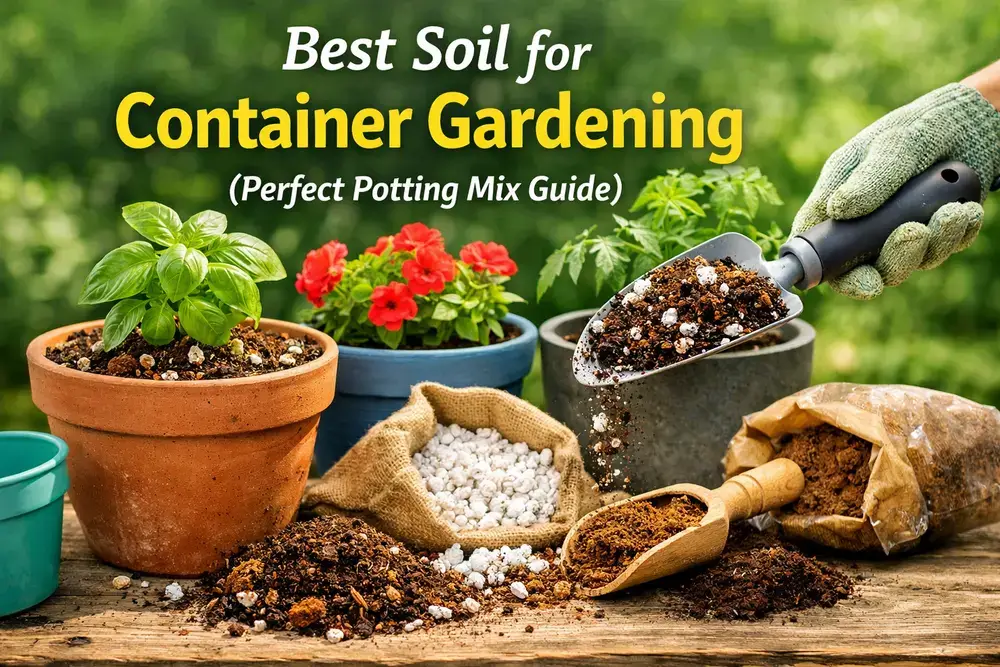
If your plants struggle in pots, the problem is often not the plant. It is the soil. Choosing the best soil for container gardening can make the difference between weak growth and a thriving, productive garden.
Unlike ground soil, containers depend entirely on what you provide. The right mix controls drainage, nutrients, and root health. In this guide, you will learn how to choose or create the perfect potting mix, what ingredients actually matter, and how to avoid common beginner mistakes.
By the end, you will know exactly how to build a soil mix that keeps your plants healthy and growing strong.
Quick Answer
The best soil for container gardening is a lightweight, well-draining potting mix made from materials like peat moss or coco coir, perlite, and compost. Avoid using garden soil, as it compacts easily and restricts root growth. A balanced mix holds moisture while still allowing excess water to drain.
What Makes the Best Soil for Container Gardening?
Container soil is very different from garden soil. Plants in pots have limited space, so the soil must perform multiple roles at once.
A good potting mix should:
- Drain excess water quickly
- Retain enough moisture for roots
- Provide air pockets for root breathing
- Supply nutrients or hold fertilizers
According to research from Colorado State University, a proper container mix should be light and porous rather than dense or heavy, which helps roots grow freely and prevents waterlogging. You can learn more about this in this guide on best soil mix for container gardening.
Key Ingredients in a Good Potting Mix
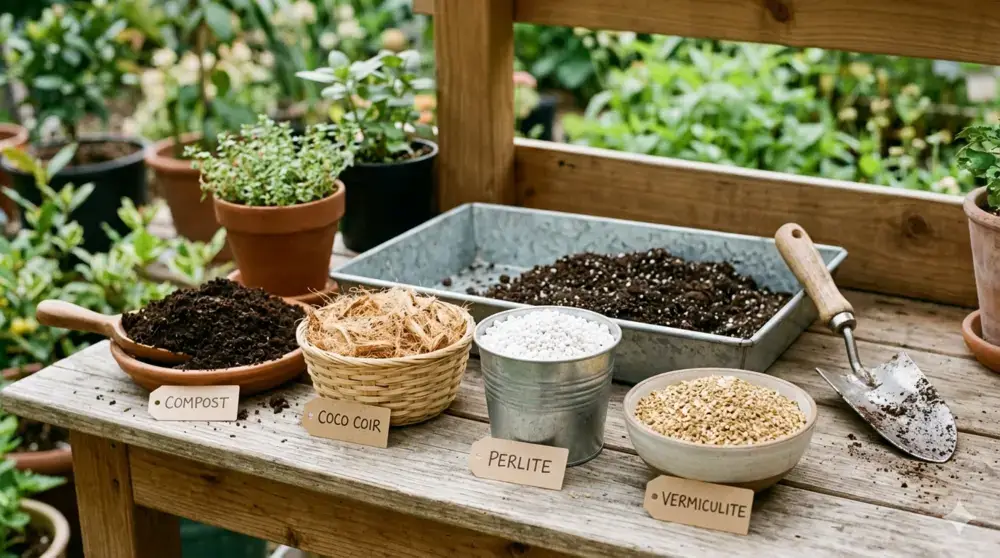
Most quality potting mixes contain a blend of these:
- Peat moss or coco coir: Holds moisture
- Perlite or vermiculite: Improves drainage and aeration
- Compost or organic matter: Adds nutrients
- Bark or sand (optional): Improves structure
Each ingredient plays a role. Removing one often leads to poor results.
Why You Should Never Use Garden Soil in Pots
This is one of the most common beginner mistakes.
Garden soil may seem convenient, but it creates serious problems in containers:
- Becomes compact and blocks airflow
- Holds too much water, causing root rot
- May contain pests, weeds, or diseases
Experts from North Carolina State University explain that container plants require a different growing medium than in-ground plants. You can explore their detailed explanation on what makes a good potting mix for containers.
Best Soil Mix for Potted Plants (Simple Recipes)
You can either buy a ready-made mix or create your own at home.
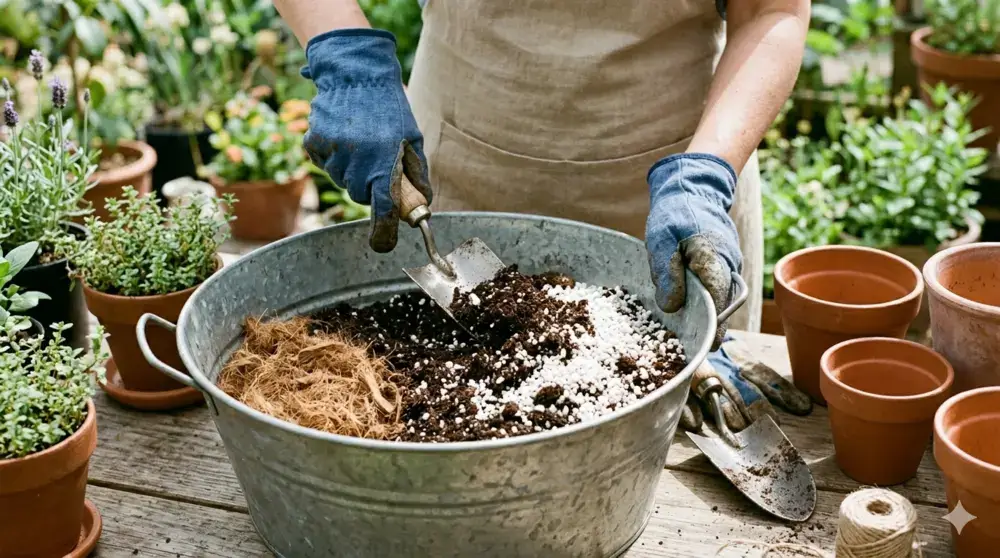
Basic Homemade Potting Soil Recipe
This simple mix works for most plants:
- 1 part peat moss or coco coir
- 1 part compost
- 1 part perlite
Mix thoroughly before use. This creates a balanced soil mix for potted plants that drains well and holds nutrients.
Moisture-Retaining Mix (For Hot Climates)
- 2 parts coco coir
- 1 part compost
- 1 part vermiculite
This mix is useful if you live in a warm area where containers dry out quickly. If you are gardening in a hot region, this approach pairs well with the techniques explained in this guide on container gardening in Florida for beginners.
Fast-Draining Mix (For Succulents & Herbs)
- 1 part potting soil
- 1 part sand or grit
- 1 part perlite
Perfect for plants that hate wet roots.
Store-Bought vs Homemade Potting Mix
Choosing between store-bought and homemade depends on your time and budget.
| Feature | Store-Bought Mix | Homemade Mix |
|---|---|---|
| Convenience | Ready to use | Requires preparation |
| Cost | Higher over time | More affordable long-term |
| Control | Limited | Full control of ingredients |
| Quality | Consistent | Depends on materials |
If you are a beginner, start with a good commercial mix. As you gain experience, try making your own.
Step-by-Step Guide to Preparing Soil for Containers
Follow these steps to get the best results:
Step 1: Choose the Right Container
Make sure it has drainage holes. Without drainage, even the best soil will fail.
Step 2: Add a Base Layer (Optional)
Some gardeners add small stones or broken pottery at the bottom, though this is optional if drainage is already good.
Step 3: Fill with Potting Mix
Add your prepared soil mix, leaving a small gap at the top.
Step 4: Plant Carefully
Place your plant and gently firm the soil around it.
Step 5: Water Properly
Water until it drains from the bottom. This helps settle the soil and remove air pockets.
If you are new to planting, you can follow a complete beginner process in this container gardening for beginners step-by-step guide.
Beginner Tips for Better Soil Performance
These simple tips can improve your results:
- Refresh soil every season for best growth
- Add compost regularly to boost nutrients
- Avoid overwatering, even with good soil
- Use mulch on top to retain moisture
- Check soil texture every few weeks
Also, having the right tools makes soil preparation easier. A basic set is covered in this guide on essential gardening tools every beginner should know.
Common Mistakes to Avoid
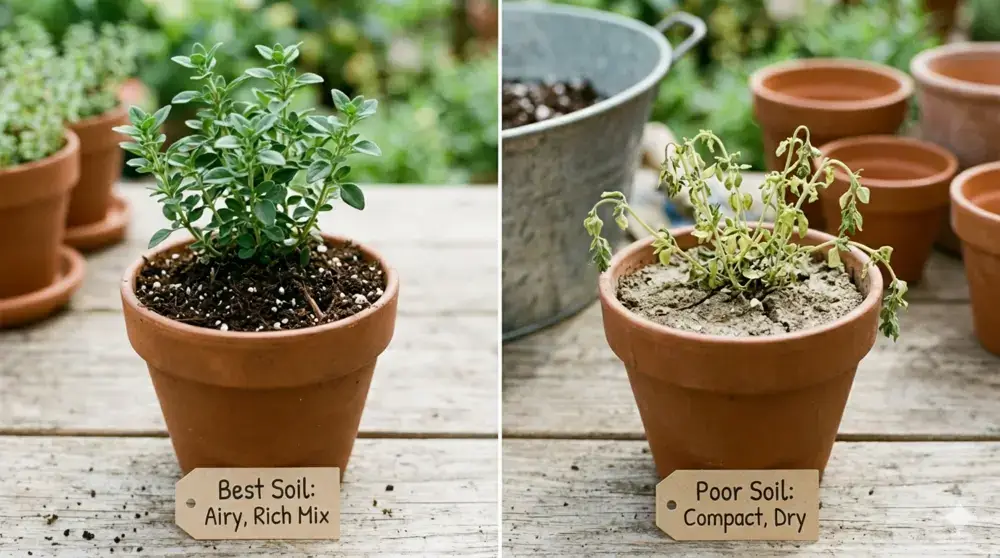
Many beginners struggle because of simple errors.
1. Using Heavy Soil
Dense soil suffocates roots and holds too much water.
2. Ignoring Drainage
Even the best soil fails without proper drainage.
3. Not Feeding Plants
Potting mix loses nutrients over time. You must replenish them.
4. Reusing Old Soil Without Refreshing
Old soil becomes compact and nutrient-poor. Always mix in fresh compost.
5. Overwatering
Too much water is just as harmful as too little.
The University of Illinois Extension also highlights that container soil must balance moisture retention and aeration to support healthy plant growth. Their explanation of soil requirements for container plants reinforces why structure matters as much as nutrients.
Best Plants for Container Gardening Soil Mixes
Different plants prefer slightly different soil types.
Vegetables
- Tomatoes
- Peppers
- Lettuce
Use a nutrient-rich, well-draining mix.
Herbs
- Basil
- Mint
- Rosemary
Prefer lighter soil with good drainage.
Flowers
- Petunias
- Marigolds
- Geraniums
Need balanced soil with moderate nutrients.
Succulents
- Aloe
- Jade plant
Require very fast-draining soil.
How to Improve Soil Over Time
Even the best soil needs maintenance.
Here is how to keep it healthy:
- Add compost every few weeks
- Mix in slow-release fertilizer
- Replace topsoil if it becomes compact
- Rotate plants to prevent nutrient depletion
Healthy soil leads to strong roots, and strong roots lead to better plants.
Conclusion
Choosing the best soil for container gardening is not complicated, but it does require the right approach. A good potting mix should be light, well-draining, and rich in organic matter. Avoid garden soil, focus on balanced ingredients, and adjust your mix based on plant needs.
Once you get the soil right, everything else becomes easier. Your plants will grow faster, stay healthier, and require less effort to maintain.
If you are ready to start your container garden, take the next step by exploring the complete beginner guide linked above. It will walk you through the entire process from setup to harvest. You can also browse more practical tips on Gardening Note to improve your results with every planting season.
FAQs About the Best Soil for Container Gardening
1. What is the best soil for container gardening?
The best soil for container gardening is a light, well-draining potting mix made with materials like coco coir or peat moss, perlite, and compost. This combination allows roots to breathe while holding enough moisture. Avoid heavy garden soil, as it compacts in pots. For best results, choose a mix labeled for containers or create your own using equal parts of these ingredients.
2. Can I use regular garden soil in containers?
No, regular garden soil is not suitable for pots. It becomes dense and restricts airflow, which can damage roots. The best soil for container gardening must stay loose and well-aerated. If you only have garden soil, mix it with compost and perlite to improve structure, but it is still better to use a proper potting mix for consistent results.
3. How often should I replace or refresh potting soil?
You should refresh your potting soil at least once a year. Over time, the best soil for container gardening loses nutrients and becomes compact. To maintain healthy plants, mix in fresh compost or replace the top layer before each planting season. For heavily used pots, consider fully replacing the soil every one to two years.
4. What is the best homemade potting mix for beginners?
A simple homemade mix works well for most plants. Combine one part coco coir or peat moss, one part compost, and one part perlite. This creates the best soil for container gardening at home because it balances drainage and moisture retention. Mix thoroughly and slightly moisten before use to help plants establish quickly.
5. How do I improve drainage in my container soil?
To improve drainage, add materials like perlite, coarse sand, or small bark pieces to your mix. The best soil for container gardening should never stay soggy. Always use pots with drainage holes and avoid overwatering. If water sits on the surface, your soil likely needs more aeration components mixed in.