Best Fertilizer for Container Plants (Organic & Chemical Guide)
Container plants depend entirely on you for nutrients. Unlike garden soil, pots have limited space, and nutrients wash out quickly with watering. That is why choosing the best fertilizer for container plants is not optional, it is essential for healthy growth.
In this guide, you will learn how fertilizers work, the difference between organic and chemical options, and how to feed your plants properly. Whether you grow herbs on a balcony or flowers in decorative pots, this practical guide will help you get stronger, greener, and more productive plants.
Quick Answer
The best fertilizer for container plants is a balanced, slow-release or liquid fertilizer that provides essential nutrients like nitrogen, phosphorus, and potassium. Organic options improve soil health over time, while chemical fertilizers deliver quick results for fast growth.
Why Fertilizing Container Plants Is Different
Container gardening is not the same as growing plants in the ground. In pots, plants face a few limitations:
- Limited soil means limited nutrients
- Frequent watering washes nutrients away
- Roots cannot expand to find more nutrients
According to this fertilizer overview, plants rely on external nutrients to grow properly, especially when natural soil systems are absent.
That is why regular feeding is essential for potted plants.
Understanding Plant Nutrients (Simple Guide)
Before choosing a fertilizer, it helps to understand what plants actually need.
Primary Nutrients (NPK)
- Nitrogen (N): Leaf growth and green color
- Phosphorus (P): Root development and flowering
- Potassium (K): Overall strength and disease resistance
Secondary Nutrients
- Calcium, magnesium, and sulfur support plant structure and health
Micronutrients
- Iron, zinc, and manganese are needed in small amounts but are still important
If you are just starting, it is worth reading about the right soil mix because nutrients depend heavily on soil quality. A good foundation begins with a proper potting mix, as explained in this guide on the best soil for container gardening.
Types of Fertilizers for Container Plants
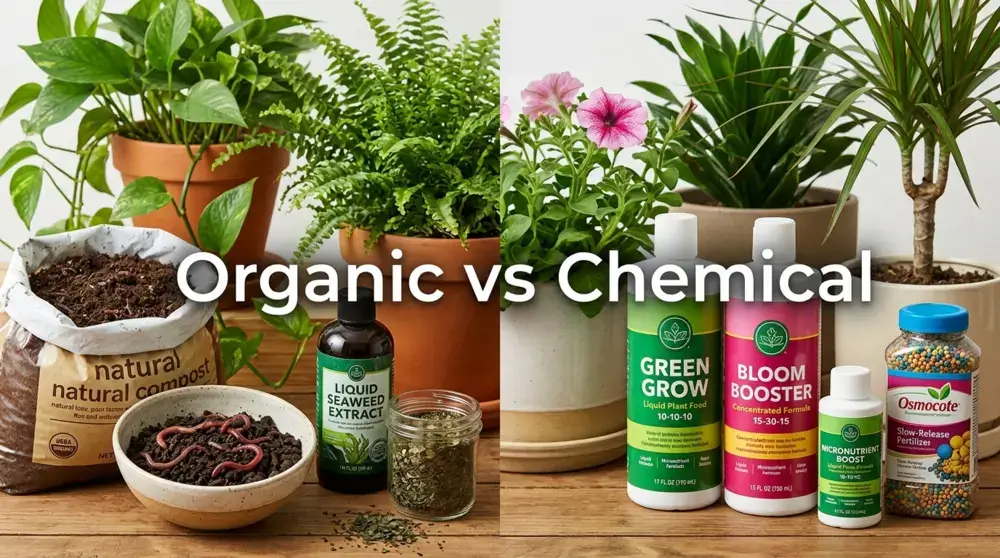
There are two main categories: organic and chemical. Each has its place depending on your goal.
Organic Fertilizer for Containers
Organic fertilizers come from natural sources such as compost, manure, or plant-based materials. You can learn more from this detailed organic fertilizer explanation.
Examples:
- Compost
- Worm castings
- Fish emulsion
- Seaweed extract
Advantages:
- Improves soil structure
- Supports beneficial microbes
- Safer for beginners
Limitations:
- Slower results
- Requires regular application
Organic fertilizer is ideal if you want long-term soil health and natural gardening.
Chemical (Synthetic) Fertilizers
These are manufactured fertilizers designed to deliver nutrients quickly.
Examples:
- Liquid NPK fertilizers
- Granular fertilizers
- Slow-release pellets
Advantages:
- Fast results
- Easy to measure and control
- Good for flowering and fruiting plants
Limitations:
- Can cause overfeeding
- Does not improve soil quality
Best Fertilizer for Container Plants by Type
Not all fertilizers work the same way. Here is a simple comparison to help you choose.
| Fertilizer Type | Best For | How Often to Use | Key Benefit |
|---|---|---|---|
| Liquid fertilizer | Fast growth | Every 1–2 weeks | Quick nutrient uptake |
| Slow-release pellets | Busy gardeners | Every 2–3 months | Long-lasting feeding |
| Organic compost | Soil improvement | Monthly | Natural nutrient supply |
| Fish/seaweed feed | Leafy plants | Every 2 weeks | Gentle and effective |
How to Feed Potted Plants Properly
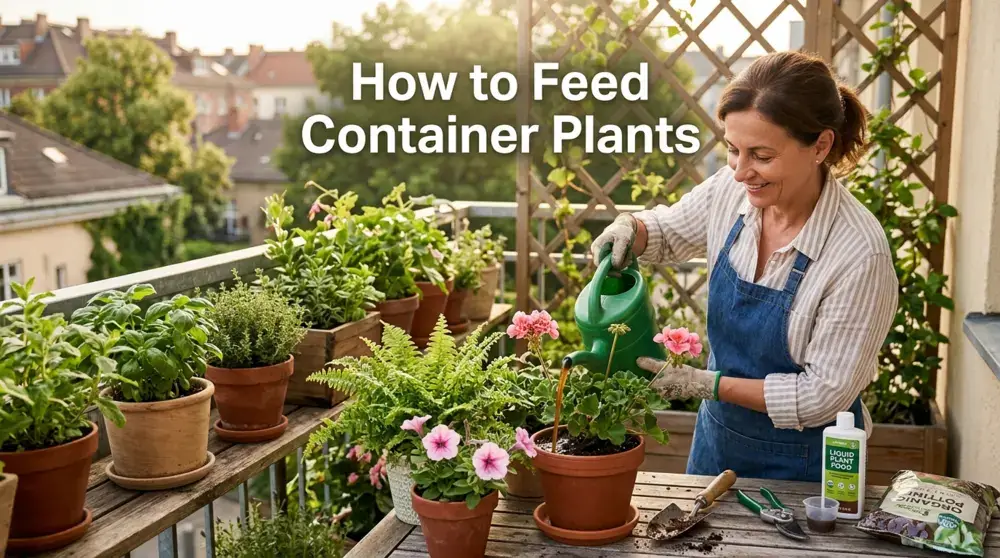
Feeding plants is not just about choosing a fertilizer. Timing and method matter.
Step-by-Step Feeding Guide
- Start with healthy soil
Always begin with a nutrient-rich potting mix - Choose the right fertilizer
Match the fertilizer to your plant type - Follow instructions carefully
Avoid guessing quantities - Water before fertilizing
This prevents root burn - Apply regularly but lightly
Small, consistent feeding works best
Watering also plays a key role in nutrient absorption. If you are unsure about watering frequency, this guide on how often to water container plants will help you avoid common mistakes.
Organic vs Chemical Fertilizer: Which Is Better?
The answer depends on your goal.
- Choose organic fertilizer for containers if you want sustainable gardening and healthier soil
- Choose chemical fertilizer if you need quick growth or faster flowering
Many experienced gardeners use a combination of both. For example:
- Organic compost for long-term health
- Liquid fertilizer for quick boosts
Common Mistakes When Fertilizing Container Plants
Even good fertilizers can harm plants if used incorrectly.
Avoid These Mistakes
- Over-fertilizing, which burns roots
- Using the wrong fertilizer type
- Ignoring plant-specific needs
- Fertilizing dry soil
- Feeding during plant dormancy
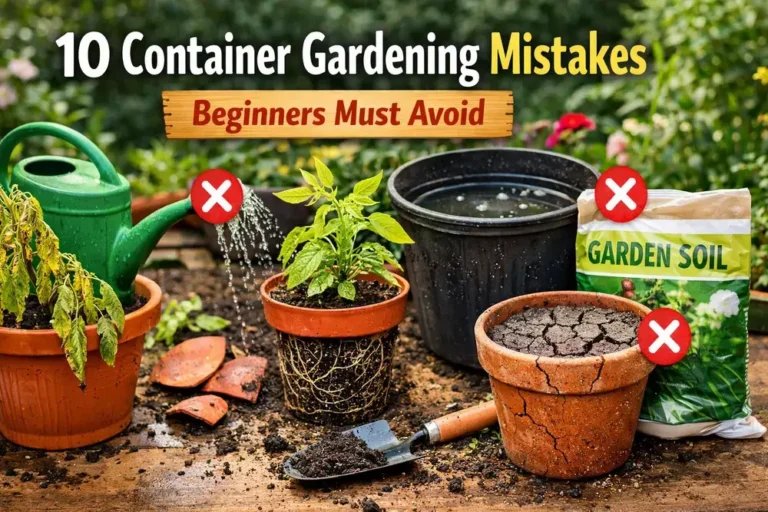
These issues are common among beginners. You can avoid them by reviewing these container gardening mistakes beginners must avoid.
Best Fertilizers for Different Types of Plants
Different plants have different nutrient needs.
Leafy Plants (Herbs, Lettuce)
- High nitrogen fertilizer
- Example: liquid organic feed
Flowering Plants (Roses, Petunias)
- Balanced or phosphorus-rich fertilizer
- Encourages blooms
Fruit Plants (Tomatoes, Peppers)
- High potassium fertilizer
- Supports fruit development
Indoor Plants
- Mild liquid fertilizer
- Less frequent feeding
Beginner Tips for Better Results
If you are new to feeding potted plants, keep these tips in mind:
- Start with half the recommended fertilizer dose
- Observe the plant response before increasing
- Use slow-release fertilizer for convenience
- Combine feeding with a regular watering routine
- Keep a simple schedule to stay consistent
Signs Your Plants Need Fertilizer
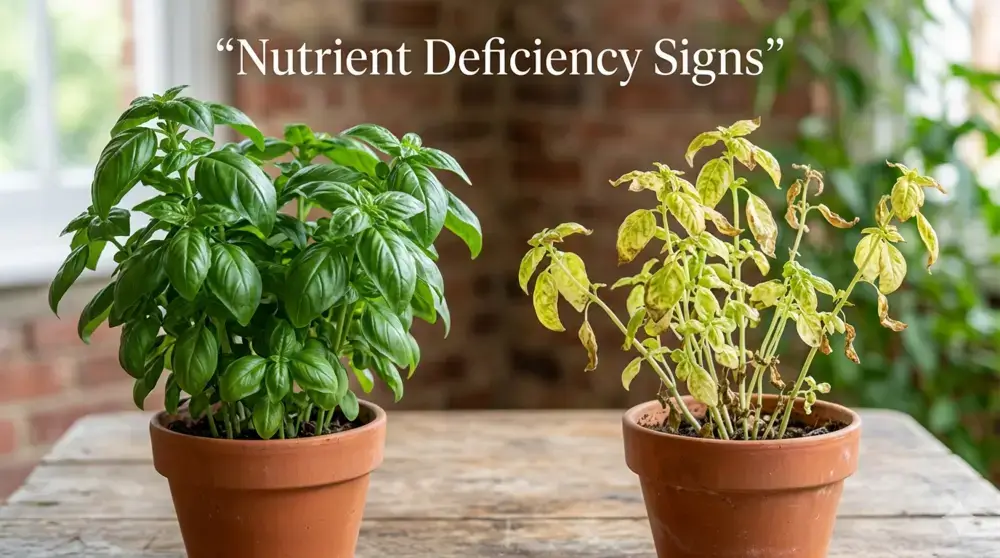
Watch your plants closely. They will show signs when nutrients are lacking.
- Yellow leaves
- Slow growth
- Weak stems
- Fewer flowers
If you notice these signs, adjust your feeding routine.
Conclusion
Choosing the best fertilizer for container plants is about balance. Plants need the right nutrients, in the right amount, at the right time. Organic fertilizers build long-term soil health, while chemical fertilizers provide quick results when needed.
Start simple, observe your plants, and adjust your approach. With the right feeding routine, even small containers can produce healthy, vibrant plants.
If you want to improve your container gardening results, explore more beginner-friendly guides on Gardening Note. Learn how to choose the right soil, master watering techniques, and avoid common mistakes to grow stronger plants every season.
FAQs about Best Fertilizers for Container Plants
1. What is the best fertilizer for container plants for beginners?
The best fertilizer for container plants for beginners is a balanced liquid fertilizer (like 10-10-10 or 20-20-20) or a slow-release pellet. These are easy to use and reduce the risk of overfeeding. Start with half the recommended dose and apply every 1–2 weeks. This approach helps you learn how your plants respond without causing damage.
2. How often should I fertilize container plants?
Most container plants need feeding every 1–2 weeks with liquid fertilizer or every 2–3 months with slow-release options. Since nutrients wash out quickly from pots, regular feeding is essential. Using the best fertilizer for container plants consistently will keep growth steady, especially during active growing seasons like spring and summer.
3. Is organic fertilizer better for container plants?
Organic fertilizer is a great choice if you want healthier soil and a natural approach. It improves soil structure and supports beneficial microbes over time. While it works slower than chemical options, it is often considered one of the best fertilizer choices for container plants when long-term plant health is your priority.
4. Can I over-fertilize my potted plants?
Yes, over-fertilizing is one of the most common mistakes in container gardening. Too much fertilizer can burn roots, cause leaf damage, and slow growth. Even when using the best fertilizer for container plants, always follow instructions and avoid applying it to dry soil. Less frequent, balanced feeding is safer than heavy doses.
5. What type of fertilizer is best for flowering container plants?
Flowering plants benefit from fertilizers higher in phosphorus, which supports bloom production. A balanced fertilizer also works well if used consistently. Choosing the best fertilizer for container plants depends on the plant type, but for flowers, look for formulas labeled “bloom booster” and apply during the flowering stage for better results.